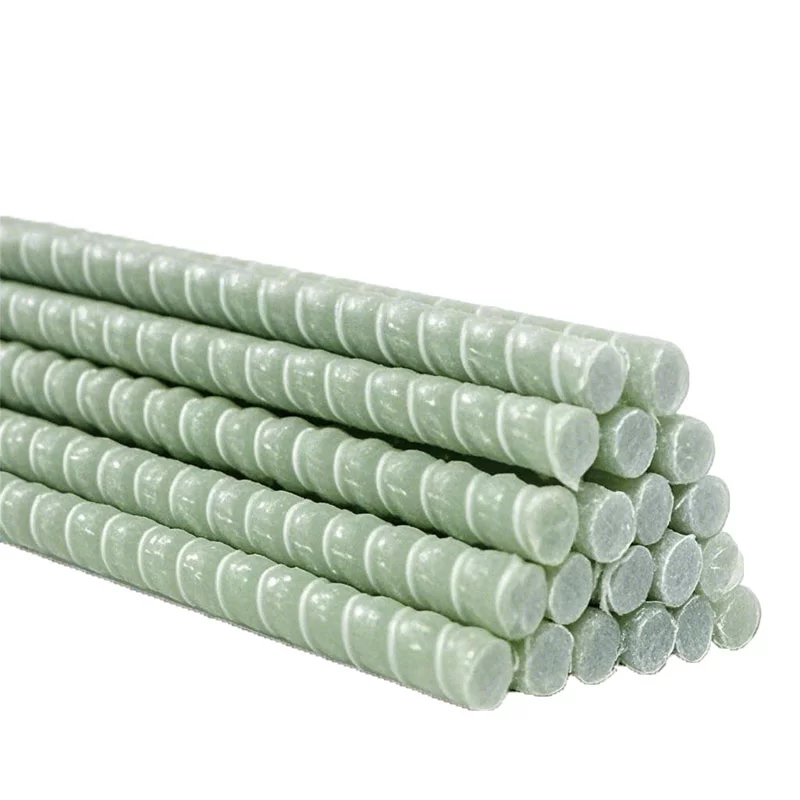
basalt fiber rebar

  • Home
  • basalt fiber rebar

Overcoming Structural Corrosion: Choosing the Right basalt fiber rebar

Traditional steel reinforcement often becomes the weak link in infrastructure, succumbing to rust, moisture degradation, and aggressive chemical exposure. For engineers and project managers in the construction, wastewater treatment, and chemical industries, finding a material that guarantees longevity without compromising on structural integrity is a constant challenge. Unpredictable maintenance costs and the risk of early concrete spalling can easily derail large-scale engineering projects.

Addressing this critical vulnerability requires a fundamental shift in material selection. Operating from our state-of-the-art facilities in the Fuzhuang Industrial Park, we specialize in high-quality Fiber Reinforced Polymer (FRP) solutions that directly solve these environmental pain points. By utilizing advanced pultrusion and molding processes, we engineer non-metallic structural reinforcements that simply do not rust. Backed by a strict quality management system and extensive experience serving international markets across North America, Europe, and Southeast Asia, our manufacturing capabilities ensure that every batch delivers the durability, corrosion resistance, and high strength-to-weight ratios required to future-proof your most demanding projects.

Engineering Standards for basalt fiber rebar

Precision engineering dictates the performance of every composite material deployed in the field. Leveraging multiple advanced pultrusion lines and a deeply integrated manufacturing workflow, we achieve exceptional mechanical uniformity in our structural profiles. When specifying reinforcement for corrosive environments, understanding the precise technical benchmarks separates standard materials from superior engineered solutions.

Performance Metric Industry Significance Our Engineering Standard Advantage
Tensile Strength-to-Weight Ratio Determines load-bearing capacity relative to the dead weight of the structure. Manufactured via optimized pultrusion for maximum longitudinal fiber alignment. Significantly lighter than steel while offering superior tensile strength, reducing transport and handling costs.
Corrosion & Chemical Resistance Crucial for longevity in wastewater, chemical plants, and coastal applications. Formulated with premium anti-aging resins and high-grade fibers. Absolute immunity to rust and chloride-ion attacks, completely eliminating concrete spalling risks.
Dimensional Stability Ensures reliable integration into large-scale engineering projects without warping. Strict quality management protocols governing curing temperatures and line speeds. Maintains precise tolerances under extreme thermal and mechanical stress, ensuring seamless installation.

Maximizing ROI with basalt fiber rebar

Strategic material procurement extends far beyond the initial purchase price; it is fundamentally about total lifecycle value. By replacing conventional reinforcement with highly durable, anti-aging composite solutions, stakeholders drastically reduce the financial burden of continuous maintenance, structural repairs, and early asset replacement. Our customized composite solutions empower global clients to shift their budgets from reactive maintenance to proactive growth.

When deployed in highly corrosive sectors—such as wastewater treatment and marine construction—the return on investment becomes unmistakable within the first decade. The chart below illustrates the projected lifecycle maintenance costs of traditional steel reinforcement compared to advanced pultruded composite alternatives, demonstrating the compounding financial benefits of specifying engineered polymers.

Related products

Factors Influencing FRP Underground Water Storage Tanks Price

Factors Influencing FRP Underground Water Storage Tanks Price

Determining the frp underground water storage tanks price involves more than comparing initial quotes; it requires a deep dive into material specifications, structural requirements, and long-term operational costs. Fiber-reinforced polymer FRP has emerged as a primary choice for subterranean water management due to its inherent resistance to corrosion and soil chemistry, making it a strategic investment for municipal and industrial projects. For procurement managers and engineers, the challenge lies in balancing the upfront capital expenditure with the total cost of ownership. Unlike traditional metallic or concrete reservoirs, composite tanks offer unique weight-to-strength ratios that can significantly reduce logistical expenses and installation timelines.
High Performance FRP Systems and Where to buy fiberglass grating

High Performance FRP Systems and Where to buy fiberglass grating

Managing wastewater in challenging environments requires infrastructure that can withstand aggressive chemical exposure without compromising structural integrity. Traditional concrete or steel systems often succumb to corrosion and leakage, leading to costly repairs and environmental hazards. Our premium fiberglass composite solutions offer a high-performance alternative, specifically engineered for long-term durability in residential, industrial, and municipal settings. By integrating advanced reinforced plastics, these systems eliminate common failure points such as splicing gaps and oxidative rust. Whether you are looking to buy fiberglass grating for industrial flooring or implementing high-capacity septic tanks for municipal waste, the shift toward composite materials ensures a service life exceeding 30 years.
What buyers should know about Trough Type Fiberglass Cable Trays

What buyers should know about Trough Type Fiberglass Cable Trays

This FAQ explains the material, electrical properties, environmental suitability, installation considerations, and maintenance points for trough type fiberglass cable trays. It is intended for industrial, commercial, marine, power, data center, and water treatment cable-routing projects where corrosion resistance, low weight, and non-conductive construction matter.
Factors Affecting FRP Water Tank Price and Long Term Value

Factors Affecting FRP Water Tank Price and Long Term Value

Determining the budget for composite storage systems requires more than a simple quote; it involves understanding the intersection of material science and project requirements. Fiber Reinforced Polymer FRP has emerged as a primary alternative to steel and concrete due to its inherent corrosion resistance and high strength-to-weight ratio. This article analyzes the factors influencing frp water tank price to help procurement managers make informed financial decisions. In industrial environments, the cost of a storage unit is often overshadowed by the cost of failure. Traditional materials frequently suffer from oxidation and chemical degradation, leading to expensive replacements and unplanned downtime.
Michael Thorne
We switched to basalt fiber rebar for our coastal wastewater project. The corrosion resistance is phenomenal, and it was surprisingly lightweight to install. Highly recommend for any marine applications.
13 March 2026
Sarah Jenkins
Incredible strength-to-weight ratio. Our crew finished the structural grid much faster than they would have with traditional steel. The manufacturing quality is consistently top-notch.
13 March 2026
David O'Connor
A true game-changer for long-term infrastructure. We've completely eliminated our concerns about rust and concrete spalling. The zero-maintenance lifecycle makes it a fantastic investment.
13 March 2026
Marcus Reed
Excellent dimensional stability under heavy loads. The pultruded rebar met all our strict engineering standards perfectly without any warping. Great technical support from their team as well.
13 March 2026

If you are interested in our products, you can choose to leave your information here, and we will be in touch with you shortly.