

Addressing the critical failure points of traditional materials in Southeast Asian industrial and municipal projects.
High humidity and salinity in coastal Thai regions cause traditional steel rebar to oxidize quickly, leading to concrete spalling and structural instability in bridges and piers.
Industrial wastewater treatment plants face frequent tank leaks because standard concrete or metal tanks cannot withstand the aggressive chemical compositions of industrial effluents.
The immense weight of traditional materials increases logistics expenses and requires heavy machinery, slowing down the deployment of municipal sewage and ventilation systems.
Infrastructure in high-moisture zones requires constant painting and patching to prevent rust, resulting in excessive long-term operational expenditures and service downtime.
Adding reinforcement to old structures often adds too much dead load, risking foundation failure if high-strength, lightweight materials are not utilized for retrofitting.
Poorly sealed septic systems in rural areas lead to groundwater contamination, highlighting the need for seamless, non-porous containment solutions like composite tanks.
Combining precision winding and pultrusion technologies to eliminate corrosion and enhance structural longevity.
Using pultruded glass fiber reinforced polymer to replace steel. Its non-conductive and non-corrosive nature eliminates rust, extending concrete life in saline environments.
Filament-wound FRP structures provide a seamless, leak-proof barrier that is impervious to sulfuric acid and chemical corrosion, ensuring safe waste containment.
FRP's high strength-to-weight ratio allows for prefabricated components that are easier to transport and install, significantly reducing on-site labor and crane requirements.
The inherent chemical stability of fiberglass products removes the need for protective coatings, drastically lowering lifetime maintenance costs.
Application of high-modulus carbon fiber plates to existing beams and columns, providing immense tensile strength without adding significant volume or mass to the structure.
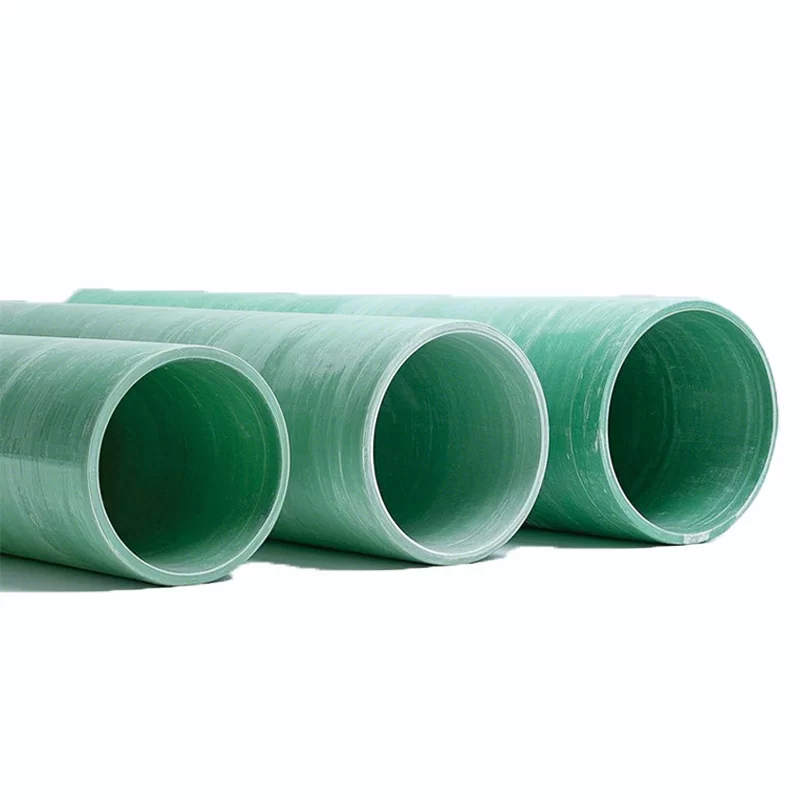
Utilizing FW-4000 microcomputer winding for pressure pipes and ventilation ducts that resist scaling and corrosion in municipal water diversion projects.


Our production capabilities and certification standards ensure global reliability.
Evaluating the transition from conventional reinforced concrete to high-performance FRP.
Thailand's infrastructure sector is characterized by a mix of dense urban development in Bangkok and extensive agricultural and coastal zones. In these regions, the high moisture content and saline air create a brutal environment for traditional steel-reinforced concrete. The construction of municipal wastewater plants and coastal roads has historically been plagued by premature structural degradation, driving a market shift toward materials that are inherently immune to electrochemical corrosion.
The current trend indicates a strong move toward "Life-Cycle Costing" rather than just initial procurement costs. Thai developers are increasingly adopting fiber glass rebar and composite piping because they eliminate the need for expensive epoxy coatings and frequent structural repairs. Furthermore, the push for sustainable urban drainage and "Smart City" initiatives is increasing the demand for integrated FRP sewage pumping stations and modular composite tanks.
While opportunities are vast, constraints exist in the form of traditional building codes that are only recently evolving to incorporate GFRP standards. However, the ability of composite materials to reduce dead load and accelerate installation times provides a decisive competitive advantage. The outlook for the Thai market suggests a surge in the adoption of carbon fiber reinforcement for the rehabilitation of aging industrial facilities and the expansion of high-durability municipal water networks.
From basic moldings to high-precision structural composites.
The shift from manual to microcomputer-controlled equipment, such as the FW-4000 series, has eliminated human error in filament winding, ensuring that every pressure pipe meets exact safety tolerances for municipal water projects.
Combining glass fiber's cost-effectiveness with carbon fiber's rigidity has created a new class of "hybrid" composites that can be tailored for specific load-bearing requirements in heavy industry.
The industry is moving toward pre-fabricated FRP modules, such as integrated sewage pumping stations, which reduce on-site construction time by up to 50% compared to cast-in-place concrete.
How technology is reshaping the durability of global infrastructure.
Increasing focus on low-VOC resins and recyclable fiber matrices to meet stricter environmental regulations in the EU and Asia, reducing the carbon footprint of industrial plants.
Integrating fiber-optic sensors directly into the carbon fiber reinforcement layers to allow real-time structural health monitoring and predictive maintenance.
Shift toward fully integrated "utility pods" where FRP pipes, tanks, and cable trays are pre-assembled, reducing site installation errors and dramatically shortening project timelines.
Developing specialty resins for ultra-high temperature or extreme acidic environments, expanding FRP use into the deep-sea oil and gas and high-heat chemical processing sectors.
The convergence of automated production and material science is transforming composites from niche alternatives into primary structural materials. By leveraging microcomputer-controlled winding and pultrusion, manufacturers can now guarantee identical performance across thousands of units, which is critical for obtaining building code approvals in conservative markets like Southeast Asia. This reliability is the key to replacing steel in critical infrastructure.
Furthermore, the integration of carbon fiber is no longer limited to aerospace. In civil engineering, it is becoming the standard for "invisible" reinforcement, allowing architects to maintain the aesthetic of existing heritage buildings while upgrading their seismic resistance. The synergy between GFRP for bulk corrosion resistance and CFRP for targeted strength is creating a more resilient urban fabric.
How our composite materials solve real-world engineering problems across different sectors.
In high-salinity coastal areas, traditional steel rebar in bridge piers suffers from rapid chloride-induced corrosion. By deploying fiber glass rebar, engineers create a corrosion-proof internal skeleton that prevents concrete cracking, extending the structure's maintenance-free interval from 10 to over 50 years.
Chemical plants producing aggressive effluents require containment that won't leak or degrade. Installing a fiberglass septic tank and FRP process piping ensures a non-reactive environment, preventing hazardous leaks into the local soil and meeting strict environmental compliance standards.
In dense urban areas, excavation for large concrete pipes is disruptive and slow. Using filament-wound FRP ventilation ducts and pressure pipes allows for faster installation and better resistance to the hydrogen sulfide gas typically found in old city sewer systems, preventing pipe wall thinning.
Farm-scale water distribution systems often struggle with soil acidity and UV exposure. FRP pultruded profiles and customized piping provide a lightweight, weather-resistant alternative to PVC or steel, reducing installation labor in remote rural fields.
Old factory floors often fail under new, heavier machinery loads. Applying carbon fiber reinforcement plates to the underside of existing concrete slabs increases the load-bearing capacity without requiring a full demolition or increasing the floor thickness.
Typical outcomes observed in composite material implementations.
Transitioning to GFRP rebar for our coastal project significantly reduced our risk of early concrete spalling. The lack of corrosion means we no longer have to budget for expensive anti-rust coatings every few years, optimizing our long-term O&M costs.
Using filament-wound FRP tanks for our chemical waste system solved a recurring leak problem we had with reinforced concrete. The seamless nature of the composite prevents seepage, and the installation was much faster due to the lightweight components.
The carbon fiber reinforcement plates allowed us to upgrade our warehouse floor load capacity without shutting down operations for weeks. The high tensile strength provided a secure solution with minimal disruption to the business.
A legacy of precision engineering and large-scale production since 2008.
Hebei Zhongtian Composite Materials Group Co., Ltd. was founded as a large-scale production enterprise integrating design, production, sales, and installation in Zaoqiang County, a hub for the fiberglass industry.
The company invested in FW-4000 microcomputer winding machines and pultrusion equipment to expand its product range to GFRP rebar, FRP fences, and specialized deodorization tanks.
Successfully passed ISO9001:2000 quality system certification, environmental management system certification, and occupational health and safety management system certification.
Contributing to the environmental protection industry and the South to North Water Diversion Project, establishing long-term cooperative relationships with enterprises globally.


Answering the most common technical and commercial queries for composite materials.
GFRP rebar is inherently non-corrosive because it does not contain iron. Epoxy-coated steel only provides a barrier; if the coating is scratched during transport or installation, the steel will rust and expand, causing the concrete to crack. GFRP eliminates this failure mode entirely, providing a permanent solution for saltwater exposure.
Fiberglass tanks generally have a significantly longer lifespan in chemically aggressive environments. Concrete is porous and can be eaten away by sulfuric acid produced during waste decomposition. FRP is non-porous and chemically inert, preventing leaks and structural thinning over decades of use.
Yes, when produced using microcomputer-controlled filament winding, FRP pipes can be engineered for very high pressure ratings. Their smooth internal bore reduces friction loss, and their resistance to scaling ensures a consistent flow rate over the life of the project.
Yes, this is one of the primary benefits of CFRP. Plates or wraps are bonded to the exterior of the concrete using high-strength resins. This increases the tensile strength and load capacity of beams and columns without changing their dimensions or requiring the removal of the existing structure.
Look for ISO9001 for quality management, as well as environmental and occupational health and safety certifications. These ensure that the production process is consistent, the materials are sourced responsibly, and the final products meet international engineering standards.
The first step is to define the chemical environment (pH levels, specific chemicals) and the mechanical loads (pressure, weight). Once these parameters are provided, engineers can select the appropriate resin type and fiber architecture to ensure the product performs reliably in its specific application.
Whether you are managing a municipal water project in Bangkok or a chemical plant in Rayong, our team provides the technical expertise to replace failing materials with permanent FRP solutions. Contact us today to discuss your requirements and receive a technical consultation tailored to Thailand's environmental conditions.
Discuss Your Requirements

