


Facing humid climates and stringent environmental regulations, operators struggle with material degradation and high maintenance overheads.
Traditional steel reinforcements in French wastewater plants suffer from rapid oxidation and chemical attack, leading to premature structural failure and unsafe operating conditions.
Transporting and installing heavy metal components in dense urban areas of France increases logistics costs and requires expensive heavy-lifting machinery for simple upgrades.
The constant need for anti-corrosive painting and structural patching in coastal industrial zones creates significant operational downtime and recurring labor expenses.
Strict EU regulations regarding seepage and pollutant leakage make traditional concrete septic systems risky, necessitating more secure, non-leaching material alternatives.
Thermal expansion and contraction in varied European climates cause micro-cracks in conventional masonry and metal, reducing the lifespan of critical process piping.
Conductive materials in electrical environments or hazardous chemical zones pose sparks risks, necessitating non-conductive, high-strength structural alternatives for personnel safety.
We replace vulnerable traditional materials with high-performance polymer composites engineered for extreme durability.
Utilizing fiber glass rebar to eliminate rust. The glass-fiber reinforced polymer creates an inert barrier that prevents chemical ingress, extending structure life by decades.
Our fiberglass septic tank solutions use filament-wound technology to ensure seamless, non-porous walls, guaranteeing zero leakage and full compliance with French environmental laws.
High strength-to-weight ratio composites reduce the overall mass of structural components, simplifying logistics and reducing the need for heavy cranes during French site deployments.
Applying carbon fiber reinforcement for high-stress areas, providing unmatched stiffness and tensile strength for critical industrial load-bearing components.
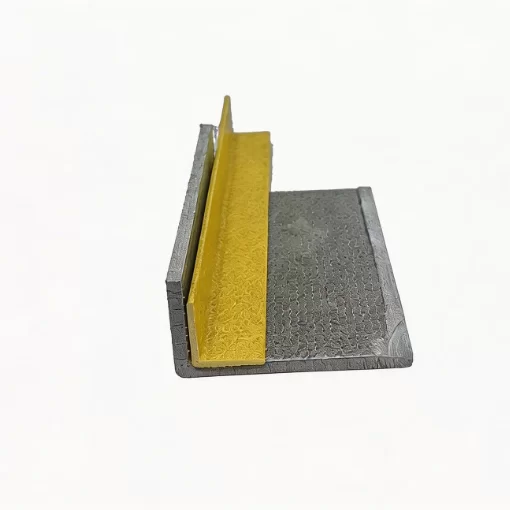
Implementing fiberglass guardrail mesh and FRP gratings that are inherently corrosion-resistant, removing the need for repeated painting and maintenance cycles.
The dielectric nature of our FRP profiles ensures that electrical currents cannot pass through the structural elements, significantly enhancing worker safety in power plants and chemical factories.


Our manufacturing precision is driven by state-of-the-art microcomputer controlled winding and extrusion equipment.
Evaluating the shift from traditional metallic structures to advanced fiberglass reinforcements in Western Europe.
France possesses a sophisticated industrial landscape ranging from aerospace in Toulouse to chemical hubs in the Rhône-Alpes. Historically, the French construction and municipal sectors relied heavily on reinforced concrete and galvanized steel. However, the coastal geography of regions like Normandy and Brittany exposes infrastructure to salt-laden air, accelerating the degradation of metal. This has created a strong demand for non-corrosive fiberglass products that can withstand maritime environments without requiring frequent, costly maintenance interventions.
Current trends in France are heavily influenced by the "European Green Deal," driving a shift toward sustainable infrastructure. There is an increasing preference for materials with longer lifecycles and lower total cost of ownership (TCO). Technical drivers include the adoption of GFRP in municipal sewage systems to prevent groundwater contamination. French engineers are increasingly specifying composite materials for bridge decks, ventilation ducts, and chemical storage tanks to avoid the systemic failure associated with steel rust and concrete spalling in acidic environments.
Despite the clear advantages, the French market faces constraints regarding the initial cost of high-end composites compared to low-grade steel. However, the outlook is positive as the industry moves toward a "lifecycle value" procurement model. The opportunity lies in the integration of carbon fiber reinforcement for specialized high-load applications and the widespread replacement of traditional septic systems with integrated fiberglass pumping stations, which offer faster installation and superior leak prevention in varied French soil conditions.
From simple hand-layup processes to precision microcomputer-controlled composite winding.
The shift toward pultrusion allows for the mass production of constant cross-section profiles, such as GFRP rebar, with tighter tolerances and higher axial strength than traditional methods.
Modern composite installations are beginning to integrate sensor fibers, allowing operators to monitor structural integrity and stress levels in real-time across industrial assets.
Research is moving toward bio-based resins to further reduce the carbon footprint of FRP production, aligning with strict European environmental sustainability targets.
How digitalization and material science are reshaping the fiberglass industry.
Using software to simulate stress and fluid dynamics before manufacturing, ensuring that FRP tanks and pipes are optimized for the specific pressures of French industrial plants.
A shift toward pre-fabricated, integrated fiberglass sewage pumping stations that can be dropped into place, reducing on-site construction time in French municipalities.
Combining GFRP with carbon fiber in strategic layers to achieve specific stiffness targets while keeping costs manageable for large-scale infrastructure projects.
Implementing automated inspection systems that use ultrasound to verify the thickness and quality of filament-wound FRP pipes before they leave the factory.
The convergence of material science and digital fabrication is enabling the creation of customized composite components that were previously impossible to manufacture. In the French market, this means that process piping for chemical plants can now be tailored to exact thermal expansion coefficients, reducing the risk of joint failure during temperature fluctuations. This precision is only possible through the use of advanced microcomputer-controlled machinery that regulates fiber tension and resin saturation in real-time.
Furthermore, the industry is moving toward "circular composites." While fiberglass was traditionally difficult to recycle, new chemical recycling processes are being explored to recover glass fibers from old FRP tanks and re-integrate them into non-structural components. This evolution is critical for companies operating within the European Union, where waste directives are becoming increasingly stringent, ensuring that the move toward composites is not just a performance upgrade, but an environmental one.
How our fiberglass products solve real-world engineering problems across different French regions.
In coastal Normandy, salt-spray and high soil salinity rapidly corrode concrete sewage lines. By implementing filament-wound FRP process piping and integrated sewage pumping stations, the municipality eliminates the risk of salt-induced corrosion and prevents pollutant seepage into the groundwater, resulting in a structural lifespan that exceeds traditional concrete by over 30 years.
A chemical processing plant in the Lyon industrial zone required storage tanks for highly acidic reagents. Steel tanks were failing every 5 years due to internal corrosion. By installing FRP filament-wound storage tanks and CFGJ high-strength corrosion-resistant sleeves, the plant has eliminated leak risks and reduced maintenance shutdowns, ensuring continuous production and improved worker safety.
Large-scale agricultural projects in southern France face soil instability and UV exposure. The use of GFRP rebar in irrigation channel linings prevents the "spalling" effect common in steel-reinforced concrete during extreme heat, while the non-conductive nature of the material ensures no interference with underground electrical sensors.
In the dense urban environment of Paris, installing heavy steel ventilation ducts in old industrial buildings is structurally risky. Utilizing lightweight FRP ventilation ducts reduces the load on existing building frames and prevents corrosion from urban smog and humidity, allowing for faster installation without the need for extensive structural reinforcement.
Facilities handling hazardous industrial waste require absolute containment. By deploying large-scale FRP deodorization tanks and custom-molded sewage tank covers, operators in the Grand Est region ensure that volatile organic compounds (VOCs) are contained and processed, meeting stringent EU air quality standards and preventing environmental contamination.
Insights into how our composite solutions perform in typical high-demand industrial environments.
In municipal water projects, the transition to GFRP rebar has fundamentally changed the maintenance schedule. We no longer see the characteristic rust streaks on concrete surfaces, and the installation speed for composite pipes is significantly higher than traditional materials.
For chemical storage, the durability of filament-wound FRP tanks is unmatched. We have seen these components handle aggressive acids without any sign of structural thinning or leakage, providing a level of security that metal tanks simply cannot offer.
Integrating carbon fiber reinforcement in specialized load-bearing parts has allowed us to reduce component thickness while increasing overall stiffness. This is critical for high-precision industrial equipment where weight and stability are key factors.
A legacy of excellence in fiberglass and polymer composite engineering since 2008.
Hebei Zhongtian Composite Materials Group Co., Ltd. was founded as a comprehensive enterprise integrating design, production, sales, and installation, based in the fiberglass industry hub of Zaoqiang County.
The company successfully passed ISO9001:2000 quality system certification, environmental management system certification, and occupational health and safety management system certification, formalizing its commitment to global standards.
Having contributed to major projects like the South to North Water Diversion Project, the company now leverages advanced FW-4000 winding and BWFRP weaving machines to serve international markets, including Europe.


Technical and commercial clarifications regarding fiberglass composite applications.
GFRP rebar is entirely non-corrosive, meaning it does not rust when exposed to moisture or chlorides, unlike steel. This prevents the internal expansion that causes concrete to crack and spall. While steel provides high ductility, GFRP offers superior tensile strength and a significantly longer service life in aggressive environments, which is ideal for the coastal and humid regions of France.
We use microcomputer-controlled filament winding technology, which allows for a continuous, seamless application of resin-impregnated glass fibers. This creates a monolithic structure without the weak points typically found in jointed concrete tanks. Every tank is manufactured to meet strict permeability standards, ensuring that wastewater is contained and does not leach into the surrounding soil, satisfying EU environmental regulations.
Yes, hybrid composites are common for high-performance applications. We can integrate carbon fiber in high-stress zones of a component to increase stiffness and load capacity while using GFRP for the bulk of the structure to manage costs. This approach is particularly useful for industrial supports and pressure vessels where specific mechanical properties are required at designated points.
The primary advantage is the strength-to-weight ratio. FRP ducts are significantly lighter, reducing the load on building supports and accelerating the installation process. Additionally, they are inherently resistant to the corrosive gases often found in industrial ventilation, eliminating the need for expensive internal coatings or frequent replacements that are necessary for galvanized steel.
Our production processes are governed by ISO9001, environmental management, and occupational health and safety certifications. We design our products to align with the technical requirements of the markets we serve. For French projects, we provide the necessary technical documentation regarding material strength, fire resistance, and chemical compatibility to assist in the local permitting and certification process.
The first step is a technical requirement analysis. This includes identifying the chemical environment, the expected mechanical loads, and the installation constraints. We recommend providing the project's fluid specifications and load requirements so our engineers can suggest the optimal fiber-to-resin ratio and the best combination of GFRP and carbon fiber to ensure structural integrity and cost-efficiency.
Whether you are managing a municipal sewage upgrade in Normandy or a chemical plant in Lyon, our high-performance GFRP and carbon fiber solutions offer the durability your project demands. Contact Hebei Zhongtian Composite Materials Group today to discuss your technical requirements and receive a tailored material specification for your site in France.
Discuss Your Requirements

