Industrial Fiberglass Products for Infrastructure Projects in Papua New Guinea

  • Home
  • Global Service
  • Industrial Fiberglass Products for Infrastructure Projects in Papua New Guinea

Industrial Fiberglass Products for Infrastructure Projects in Papua New Guinea

High-performance composite solutions including fiber glass rebar and waste management systems designed for the challenging environmental conditions of Oceania - Papua New Guinea.

Corrosion-Resistant Composite Engineering Solutions

Addressing the urgent need for durable materials in Papua New Guinea's humid climate, we provide advanced fiberglass products that outperform traditional steel and concrete in high-salinity and high-moisture environments.

Non-Metallic Mineral Products Market in Papua New Guinea

Evaluating the shift toward composite materials in the Oceania region.

The construction and industrial landscape in Papua New Guinea is increasingly prioritizing materials that can withstand extreme tropical humidity and coastal salt spray. Traditional reinforcement and storage systems often suffer from rapid oxidation and structural degradation, leading to high maintenance costs for municipal and private infrastructure.

Due to the challenging geography and remote site locations across the provinces, there is a critical demand for lightweight yet high-strength materials. Logistics in the region favor components that reduce transport weight without compromising structural integrity, making FRP (Fiber Reinforced Polymer) a strategic choice for regional development.

Current procurement patterns reveal a transition toward integrated environmental systems. The need for reliable fiberglass septic tank solutions is growing as urban centers expand and environmental regulations regarding waste management become more stringent across Oceania.

Evolution of Composite Material Application

The transition from basic fiberglass usage to high-strength structural reinforcement.

Industrial Progression

Early Market Development
Initial adoption focused on simple hand-layup products and basic molded shapes for water storage and chemical containment where basic corrosion resistance was the primary requirement.

Structural Integration Phase
The industry shifted toward pultrusion and filament winding technologies, enabling the production of standardized profiles and pressure pipes capable of replacing metallic piping in industrial plants.

Advanced Reinforcement Era
Current focus centers on high-tensile structural elements like fiber glass rebar and carbon fiber composites, integrating precision microcomputer control in the winding process.

Future Trends

1. Hybrid Reinforcement Systems

Integrating carbon and glass fibers to create tailored strength-to-weight ratios for specialized bridge and marine engineering projects in coastal regions.

2. Sustainable Resin Matrices

Development of eco-friendly resins that reduce VOC emissions during production while maintaining chemical resistance in tropical climates.

3. Modular Infrastructure Deployment

Shift toward prefabricated, integrated FRP pumping stations and tanks that can be rapidly deployed to remote areas with minimal on-site construction.

How technological shifts in fiberglass manufacturing optimize regional infrastructure.

Automated Production
Use of microcomputer-controlled winding and extrusion to ensure consistent wall thickness and structural reliability in pressure pipes.
Intelligent Material Design
Utilizing carbon fiber reinforcement to optimize load-bearing capacity in critical infrastructure nodes.
Supply Chain Optimization
Transitioning toward direct-from-manufacturer procurement to reduce intermediary costs for large-scale regional municipal projects.
Eco-Centric Engineering
Implementing non-corrosive materials to prevent soil and water contamination caused by leaching metals from degraded steel structures.

Market Outlook for Papua New Guinea

Over the next five years, the adoption of GFRP (Glass Fiber Reinforced Polymer) is expected to accelerate as Papua New Guinea invests in coastal protection and municipal sanitation. The emphasis will shift from simple replacement to "design-for-durability," where composites are integrated into the initial engineering phase of infrastructure.

We anticipate a significant increase in the use of lightweight, corrosion-resistant barriers and reinforcement in the mining and energy sectors, where the operational cost of replacing rusted steel is becoming economically unsustainable.

Localized Composite Application Scenarios

Real-world deployments tailored to the environmental demands of the Oceania region.

Coastal Road Safety Systems

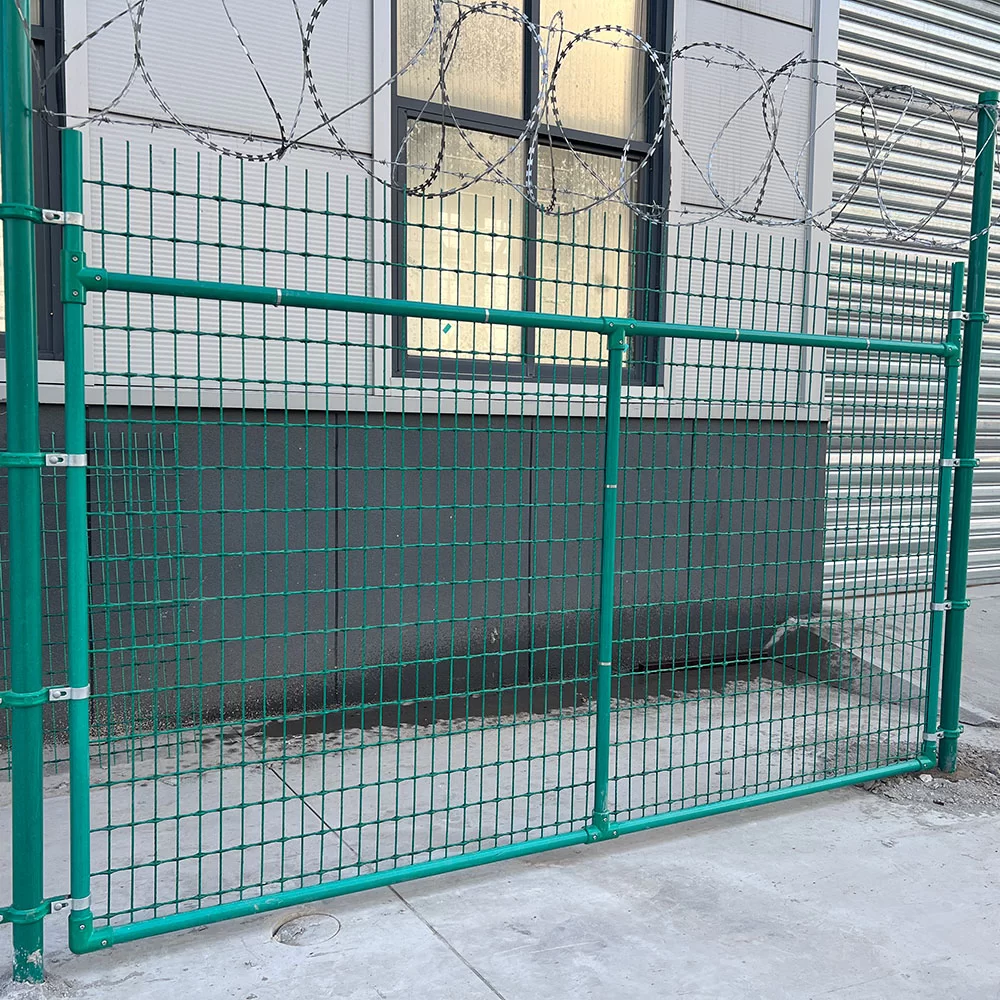
Implementation of fiberglass guardrail mesh for highways near the coast to prevent salt-air corrosion, reducing lifelong replacement frequency for transport ministries.

Remote Community Sanitation

Deployment of integrated fiberglass septic tank units in rural villages, providing leak-proof waste management that is easy to transport via small vessels.

Marine Jetty Reinforcement

Using GFRP rebar for concrete piers and dock reinforcements, ensuring that structural integrity is maintained despite constant exposure to seawater and tidal forces.

Industrial Chemical Storage

Installation of filament-wound FRP storage tanks for mining operations, providing high-pressure resistance and total immunity to acid corrosion from processing chemicals.

Agricultural Water Systems

Utilizing FRP process piping and ventilation ducts for large-scale aquaculture and farming, preventing the biological fouling and rust common in metal pipes.

Hebei Zhongtian Composite Materials Development

A legacy of precision engineering in composite materials and industrial infrastructure.

2008

Company Establishment

Founded as a large-scale enterprise integrating design, production, sales, and installation in Zaoqiang County, a strategic hub for the fiberglass industry.

2016

Certification Milestones

Successfully achieved ISO9001:2000 quality system certification, environmental management system certification, and occupational health and safety management certification.

Present

Global Infrastructure Support

Expanding international reach by delivering high-strength GFRP products and composite equipment to diverse global markets, supporting environmental protection and municipal improvement.

Fiberglass Solutions FAQ for Papua New Guinea

Clear answers to technical and procurement questions regarding FRP composites.

Why is fiberglass rebar preferred over steel in Papua New Guinea's coastal areas?

Fiberglass rebar is non-corrosive, meaning it does not rust when exposed to saltwater and high humidity. This eliminates the risk of concrete spalling and structural failure, significantly extending the lifespan of coastal infrastructure compared to traditional steel.

How do FRP fiberglass septic tanks handle the soil conditions in Oceania?

FRP tanks are chemically inert and structurally flexible, allowing them to resist corrosion from acidic soils and withstand slight ground movements without cracking, which is essential for long-term waste management in various regional terrains.

What is the primary benefit of carbon fiber reinforcement for heavy-duty projects?

Carbon fiber provides an exceptionally high strength-to-weight ratio and superior stiffness. It is used to reinforce critical load-bearing elements where minimizing weight is essential but maximum structural rigidity is required.

Can fiberglass guardrail mesh be installed in remote areas with limited equipment?

Yes, the lightweight nature of composite mesh makes it significantly easier to transport and install in remote regions of Papua New Guinea, requiring less heavy machinery for deployment compared to heavy steel barriers.

What certifications ensure the quality of these composite products?

Our production processes are backed by ISO9001:2000 quality system certification, as well as environmental and occupational health and safety management certifications, ensuring international standards for every batch produced.

How do I choose the right GFRP product for a specific infrastructure project?

Selection depends on the chemical exposure, load requirements, and environmental conditions. We recommend evaluating the specific acidity of the environment and the expected load-bearing needs to choose between glass or carbon fiber reinforcements.

Request a Technical Consultation

Partner with an experienced composite manufacturer to optimize your infrastructure projects in Oceania - Papua New Guinea with high-performance materials.

Talk to Our Team

If you are interested in our products, you can choose to leave your information here, and we will be in touch with you shortly.