Oct. 29, 2026
SIDE BY SIDE
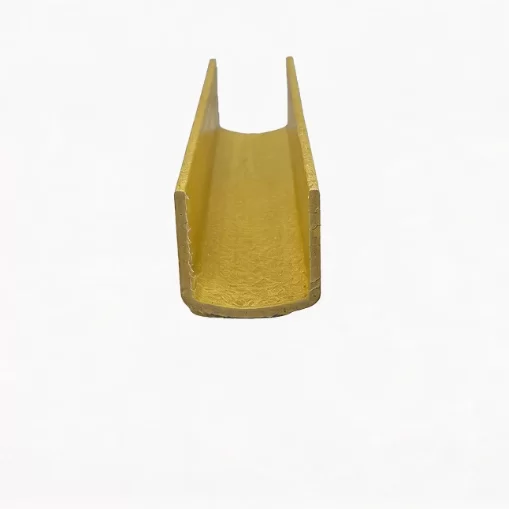
This comparison examines two FRP Three Cavity Angular Profiles from Hebei Zhongtian Composite Materials Group Co., Ltd.: the Premium FRP Three Cavity Angular Profiles and the High Strength FRP Three Cavity Angular Profiles. Both are pultruded glass fiber reinforced polymer angles featuring a three-chamber hollow cross-section. The article evaluates them side by side across six documented criteria — material composition, structural design, mechanical and electrical properties, thermal and environmental resistance, customization scope, and application coverage — using only published product excerpts. Numerical performance values and pricing are not available in the source materials and are not inferred. Buyers should use this article as an orientation guide and request detailed technical datasheets from the supplier before specifying either product.
Premium FRP Three Cavity Angular Profiles from Leading China Factory Suppliers (Hebei Zhongtian Composite Materials Group Co., Ltd.)
High Strength FRP Three Cavity Angular Profiles China Factory Suppliers (Hebei Zhongtian Composite Materials Group Co., Ltd.)
When specifying FRP Three Cavity Angular Profiles from a structural composite supplier, procurement teams and engineers frequently encounter more than one product variant from the same manufacturer. Hebei Zhongtian Composite Materials Group Co., Ltd. lists two distinct angular profile options on its catalogue: the [Premium FRP Three Cavity Angular Profiles from Leading China Factory Suppliers](https://www.hbztcomposite.com/product/premium-frp-three-cavity-angular-profiles-from-leading-china-factory-suppliers.html) and the [High Strength FRP Three Cavity Angular Profiles China Factory Suppliers](https://www.hbztcomposite.com/product/high-strength-frp-three-cavity-angular-profiles-china-factory-suppliers.html). Both are manufactured using a precision pultrusion process and share the same core three-cavity angular hollow geometry, yet their published product pages position them with different emphasis — one highlighting premium-grade corrosion resistance and architectural versatility, the other foregrounding high-strength structural performance for heavy industrial use.
This article maps the similarities and differences across a consistent set of criteria so buyers can frame the right questions before engaging the supplier.
Scope note: Quantitative performance data (tensile strength, modulus, exact wall thickness ranges, dimensional tolerances) are not present in the available published excerpts. All statements below are sourced directly from published product descriptions. Contact Hebei Zhongtian Composite Materials Group Co., Ltd. directly for certified datasheets and quotations.
| Parameter | Premium FRP Three Cavity Angular Profiles | High Strength FRP Three Cavity Angular Profiles |
|---|---|---|
| Material Composition | Glass Fiber Reinforced Polymer (FRP) | Glass Fiber Reinforced Polymer (FRP) |
| Manufacturing Process | Precision Pultrusion | Precision Pultrusion |
| Structural Design | Three-Cavity Angular Hollow | Three-Cavity Angular Hollow |
| Mechanical Property | High Strength-to-Weight Ratio | High Strength-to-Weight Ratio |
| Electrical Property | Non-Conductive / Insulating | Non-Conductive / Insulating |
| Thermal Property | Flame Retardant Options | Flame Retardant Options |
| Environmental Resistance | Corrosion & UV Resistant | Corrosion & UV Resistant |
| Dimensional Stability | High Resistance to Deformation | High Resistance to Deformation |
| Customization | Adjustable Wall Thickness & Size | Adjustable Wall Thickness & Size |
| Surface Finish | Smooth / Customizable Finishes | Smooth / Customizable Finishes |
All parameter values above are sourced from published product specifications and are identical across both products as documented.
Both profiles are described as Glass Fiber Reinforced Polymer (FRP) composites. The Premium variant specifies integration of continuous longitudinal glass fibers with a premium resin matrix, with emphasis on dimensional stability and reduced long-term maintenance costs. The High Strength variant describes the same fiber-resin combination — continuous longitudinal glass fibers with a high-grade resin matrix — stressing dimensional stability and long-term structural integrity.
The language differs in emphasis: "premium resin matrix" (Premium) vs. "high-grade resin matrix" (High Strength). Neither excerpt specifies resin type (e.g., polyester, vinyl ester, epoxy), fiber volume fraction, or fiber architecture beyond the longitudinal orientation inherent to pultrusion. Buyers requiring specific resin chemistry or fiber architecture data should request material certifications from Hebei Zhongtian Composite Materials Group Co., Ltd.
Both products share the same published structural design descriptor: Three-Cavity Angular Hollow. The Premium profile's published description explains that the three-cavity hollow design increases resistance to twisting and bending compared to standard solid profiles, and that the chambers maximize rigidity and resistance to bending and compression. The High Strength profile makes an equivalent claim: the three-cavity design increases resistance to twisting and bending compared to solid profiles.
The structural rationale — hollow chambers distributing load more efficiently than solid cross-sections — is consistent across both product pages. No dimensional drawings, moment of inertia values, or wall-thickness specifications are provided in the excerpts.
Both profiles have a High Strength-to-Weight Ratio as the mechanical property descriptor, and both are Non-Conductive / Insulating electrically.
The non-conductive property is highlighted as a safety advantage for electrical substation and high-voltage installation contexts in both product descriptions. The Premium variant notes the profile acts as a natural electrical insulator providing critical safety for high-voltage installations and substations, while the High Strength variant uses equivalent language for high-voltage electrical installations.
Both products list Flame Retardant Options under thermal properties and Corrosion & UV Resistant under environmental resistance. The word "options" in the thermal property indicates flame retardancy is a configurable feature rather than a baseline specification for all profile variants. Neither excerpt specifies the flame retardant standard, smoke density class, or UV resistance measurement methodology.
The Premium profile states profiles are completely immune to rust and chemical erosion, outperforming steel in harsh industrial and coastal environments. The High Strength profile carries a parallel statement. Both descriptions position the profiles as superior to steel in corrosive environments, but no standardised test references (e.g., ASTM, ISO salt-spray hours) are cited in the available excerpts.
Both profiles document Adjustable Wall Thickness & Size as the customization descriptor and Smooth / Customizable Finishes for surface finish. The published scope of customization is identical in both excerpts and does not specify minimum or maximum dimensional ranges, tolerancing classes, or lead times for bespoke cross-sections.
This shared customization framework suggests both variants can be adapted to project-specific requirements. The decision between them in a custom-section scenario would depend on supplier confirmation of production capability and tooling availability for each specific geometry.
This is the clearest documented positional difference between the two products. Both share six application categories, but the Premium profile's descriptions place greater emphasis on architectural and commercial contexts alongside industrial ones:
| Application Category | Premium Profile | High Strength Profile |
|---|---|---|
| Industrial Frameworks | Heavy-duty machinery racks and conveyor systems in chemical processing plants | Machinery racks and conveyor systems in chemical plants |
| Electrical Supports | Telecommunication towers and power substations | Telecommunication towers and power substations |
| Architectural Accents | Rust-proof window frames and façade supports for modern commercial buildings | Durable window frames and façade supports for modern buildings |
| Infrastructure Projects | Long-span installations, roofing systems, and suspended structural supports | Long-span installations for roofing and suspended structures |
| Modular Systems | Prefabricated building components and industrial partition walls | Prefabricated building and partition walls |
| Protective Barriers | High-load capacity safety guards and protective railings for manufacturing workshops | High-load capacity guards for manufacturing workshops |
The Premium profile's published copy explicitly calls out heavy-duty machinery racks, long-span installations, roofing systems, and suspended structural supports, indicating positioning toward demanding load-bearing applications in addition to architectural ones. The High Strength profile's copy is more concise and factory/industrial-focused. These are editorial positioning differences in the published product descriptions; they do not constitute independently verified load rating differences.
The following attributes are consistently documented across both profiles in the published excerpts:
| Dimension | Premium FRP Three Cavity Angular Profiles | High Strength FRP Three Cavity Angular Profiles |
|---|---|---|
| Resin descriptor | "Premium resin matrix" | "High-grade resin matrix" |
| Positioning emphasis | Corrosion resistance + architectural versatility + heavy-duty load-bearing | High-strength industrial durability + factory/plant use |
| Application language detail | More specific: heavy-duty, long-span, commercial building façades | More concise, industrial-plant-focused |
| Structural description detail | Explicitly contrasts "standard solid profiles" with three-cavity performance | Same structural principle, less expanded language |
Note: These differences reflect published product-page positioning. They do not represent independently tested or certified performance differentials. Confirmed technical datasheets from Hebei Zhongtian Composite Materials Group Co., Ltd. are required before drawing definitive specification conclusions.
Given the overlap in published specifications, buyers evaluating FRP Three Cavity Angular Profiles from this catalogue should direct the following questions to Hebei Zhongtian Composite Materials Group Co., Ltd.:
Both FRP Three Cavity Angular Profiles from Hebei Zhongtian Composite Materials Group Co., Ltd. share an identical published parameter table and the same core manufacturing principles. The primary documented distinction lies in how each product is editorially positioned: the Premium variant targets a broader mix of heavy industrial, long-span structural, and architectural applications with more expansive language, while the High Strength variant foregrounds concise industrial and factory-floor use. Neither product page provides quantitative mechanical data or third-party certification references in the available excerpts.
For procurement teams in the US, Middle East, Europe, or Southeast Asia, the practical next step is to request application-specific datasheets and sample certifications from Hebei Zhongtian Composite Materials Group Co., Ltd. to determine which profile configuration best matches the project load, chemical environment, and dimensional requirements.
THE PEOPLE

About the author
THE COMPANY
Hebei Zhongtian Composite Materials Group Co., Ltd. was founded in 2008 and is a large-scale production enterprise that integrates design, production, sales, and installation. The company is located in the former residence of Dong Zi and the Economic Development Zone of Zaoqiang County, a major county in the fiberglass industry. It is close to the Daguang Expressway and the Beijing Kowloon Railway, and the transportation is extremely convenient.…
YOUR NEXT STEP
Use case, specification, quantity and delivery window: make the next conversation specific.

Nov. 05, 2026
Factors Influencing FRP Underground Water Storage Tanks Price

Nov. 02, 2026
High Performance FRP Systems and Where to buy fiberglass grating

Nov. 02, 2026
What buyers should know about Trough Type Fiberglass Cable Trays

Oct. 29, 2026
Factors Affecting FRP Water Tank Price and Long Term Value

Oct. 28, 2026
Industrial FRP Grating Manufacturer and Composite Solutions

Oct. 26, 2026
Technical Guide to Selecting frp water tank manufacturers
Looking for Reliable Frp Solutions?