


Traditional building materials often fail under Egypt's extreme heat and saline soil conditions, leading to premature structural failure.
In coastal Egyptian regions, high salinity and humidity cause traditional steel rebar to rust quickly, compromising the structural integrity of reinforced concrete foundations.
Extreme temperature fluctuations in the desert climate lead to significant expansion and contraction in conventional piping, resulting in frequent leaks and joint failures.
Industrial wastewater and chemical storage in traditional concrete tanks often suffer from seepage and acid erosion, posing severe environmental risks to local soil.
The heavy weight of metallic components increases transportation costs and requires expensive heavy-lifting machinery for installation in remote Egyptian project sites.
Conventional infrastructure requires constant painting, coating, and patching to combat oxidation, leading to unsustainable long-term operational expenditure for facility managers.
Standard metal components lack the flexibility needed for complex geometric requirements in modern wastewater treatment and integrated sewage pumping stations.
Replacing traditional materials with engineered composites to ensure resilience against corrosion, heat, and chemical attack.
GFRP rebar provides total immunity to chloride-induced corrosion, ensuring that concrete structures in saline Egyptian soils maintain their strength without rusting.
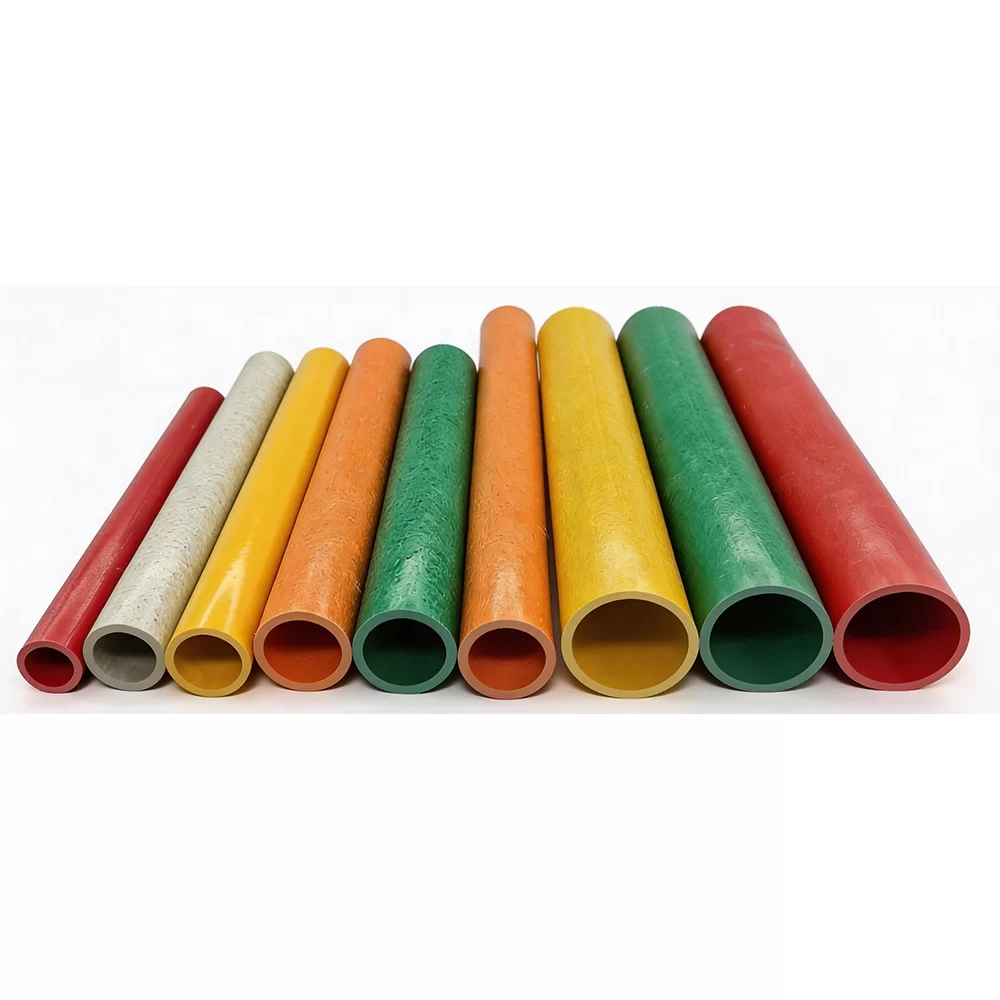
Using filament-wound FRP pipes with low thermal conductivity reduces expansion stress and eliminates the need for excessive expansion joints in hot climates.
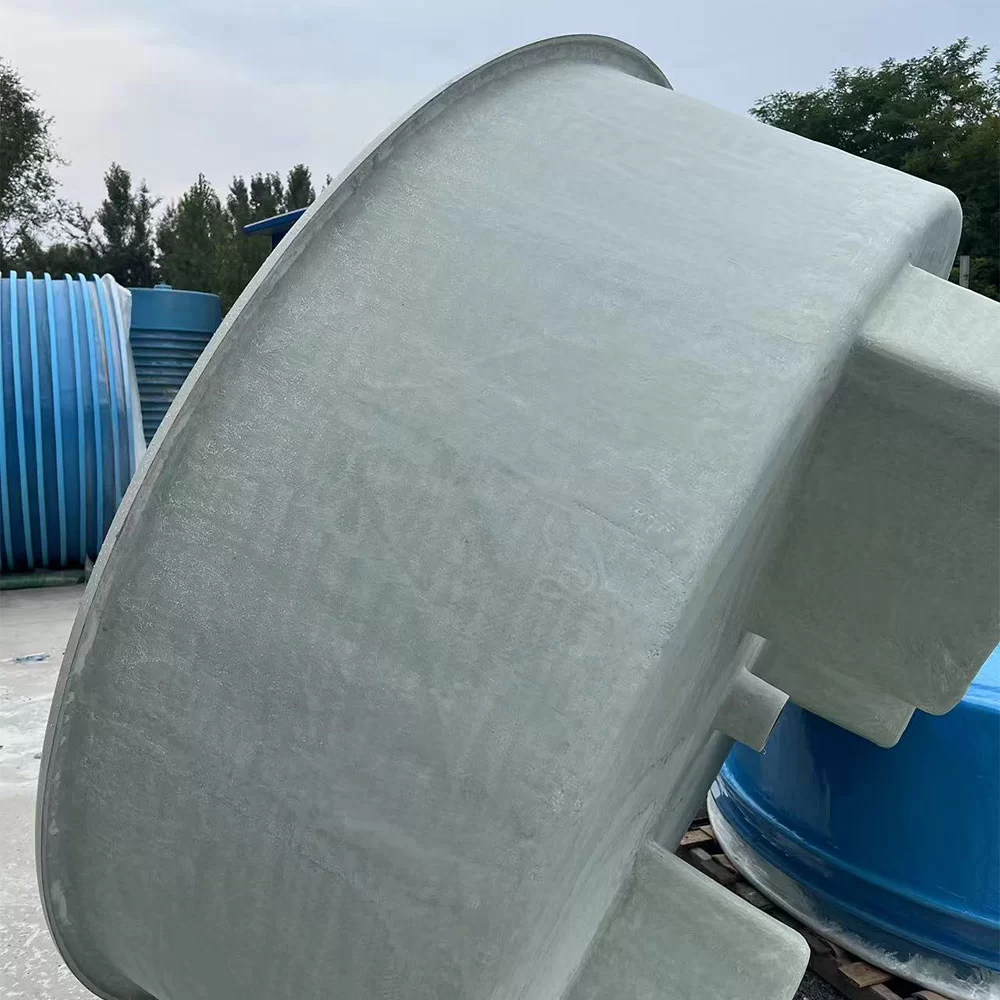
Seamlessly molded FRP tanks eliminate joint leaks and provide superior chemical resistance compared to concrete, ensuring zero seepage into the environment.
FRP pultruded profiles and gratings offer a high strength-to-weight ratio, slashing transportation costs and simplifying manual installation in rugged terrains.
The inherent corrosion resistance of GFRP eliminates the need for periodic painting or anti-rust treatments, reducing the total cost of ownership significantly.
Advanced spraying and injection equipment allow for the creation of complex FRP towers and deodorization tanks tailored to specific industrial requirements.


Our production capacity and quality certifications ensure industrial-grade reliability for every project.
Analyzing the intersection of geography, industrial growth, and material science in North Africa.
Egypt's geography, characterized by vast desert expanses and a critical dependence on the Nile Delta and coastal regions, creates a unique set of challenges for infrastructure. The high soil salinity in the Delta and the aggressive salt-spray environments along the Mediterranean and Red Sea coasts make traditional carbon steel highly susceptible to rapid oxidation. Consequently, the Egyptian construction and manufacturing sectors are increasingly seeking materials that offer inherent chemical stability and environmental resilience to reduce the lifelong cost of public and private works.
Current market trends indicate a strong move toward "sustainability through durability." There is a growing demand for integrated sewage pumping stations and advanced wastewater treatment facilities to support urban expansion and agricultural efficiency. This shift is driving the adoption of fiberglass products, as they provide a superior alternative to concrete and metal in corrosive environments. The integration of GFRP rebar into coastal bridges and seawalls is becoming a technical priority for engineers aiming to extend structure lifespans beyond the traditional 30-year cycle.
While the transition to composites presents an initial investment shift, the outlook is dominated by operational savings. The Egyptian market is moving away from "replace-and-repair" cycles toward "install-and-forget" infrastructure. Constraints such as the need for rapid deployment in remote areas make the lightweight nature of FRP profiles highly attractive. As local regulations tighten around environmental protection and water leakage, the demand for certified FRP deodorization tanks and airtight storage systems is expected to rise across the petrochemical and municipal sectors.
From simple molded shapes to high-precision structural reinforcements.
Earlier composites were used mainly as linings. Modern technology integrates reinforcement directly into the structural core, such as using GFRP rebar within concrete, creating an active barrier against chloride penetration.
The transition from manual spraying to CNC-controlled winding and pultrusion has reduced material waste and increased the fatigue limit of FRP components used in high-pressure industrial piping.
Combining the cost-effectiveness of glass fiber with the extreme stiffness of carbon fiber plates allows for tailored solutions that meet both budget and high-load technical specifications.
How technology is redefining the lifecycle of industrial infrastructure.
Integrating sensors into FRP layers to monitor structural health in real-time, allowing for predictive maintenance in critical water diversion projects.
Development of low-VOC and bio-based resins to reduce the environmental footprint of manufacturing without compromising chemical resistance.
Moving toward fully integrated, modular FRP pumping stations that can be transported and installed in days rather than months.
Using carbon fiber for ultra-high-strength sleeves and covers in aerospace and specialized industrial equipment for extreme pressure.
The convergence of automated production and material science is enabling the creation of "tailored composites." Instead of using a general-purpose material, engineers can now specify the exact fiber orientation and resin type to match the specific stressors of a site, such as the intense UV radiation found in the Egyptian Sahara. This precision reduces material waste and optimizes the strength-to-weight ratio for each specific application.
Furthermore, the industry is seeing a rise in the use of FRP for urban municipal improvement. The shift toward integrated sewage systems requires components that are not only durable but also easy to install in densely populated areas. By utilizing pultruded profiles and molded tanks, cities can upgrade their environmental infrastructure with minimal disruption to traffic and local businesses, accelerating the pace of urban modernization.
Applying composite engineering to solve specific local infrastructure problems.
In the high-salinity environment of Alexandria's ports, traditional steel rebar fails within years due to chloride attack. By implementing GFRP rebar, the concrete structures maintain their internal reinforcement without the risk of spalling or rust-expansion, significantly extending the maintenance interval of pier and dock foundations.
Remote villages often lack centralized sewage. Installing fiberglass septic tanks provides a leak-proof, lightweight solution that can be transported via small trucks and installed quickly. The corrosion-resistant nature of the FRP ensures that effluent does not leach into the groundwater, protecting local agriculture.
Industrial plants handling aggressive acids require piping that doesn't corrode. Filament-wound FRP process piping is deployed here to handle high-temperature chemical transport. These pipes resist the corrosive agents and the ambient desert heat, preventing hazardous leaks and reducing plant downtime.
The Delta's soft, moist soil is aggressive toward metal drainage pipes. Using fiberglass guardrail mesh and FRP piping for drainage networks ensures that the systems remain open and functional without the risk of oxidation and collapse over decades of use.
In densely populated urban centers, space is limited and construction time is critical. Integrated FRP sewage pumping stations are prefabricated off-site and dropped into place, reducing excavation time and eliminating the need for on-site concrete curing in congested city streets.
How typical operators evaluate the transition to composite materials.
In coastal projects, the transition from steel to GFRP rebar has fundamentally changed our maintenance schedule. We no longer face the recurring issue of concrete spalling caused by internal rust, which is critical for maintaining structural safety in high-salinity areas.
Switching to prefabricated FRP septic tanks reduced our installation time by over 60%. The lightweight nature of the material allows for rapid deployment in remote areas where heavy machinery access is limited, while the seamless build prevents all leakage.
For our chemical processing lines, filament-wound FRP piping has proven to be the only viable long-term solution. It withstands both the aggressive nature of the transported fluids and the extreme ambient temperatures of the industrial zone without warping.
A large-scale production enterprise integrating design, production, sales, and installation.
Established as a specialized producer of fiberglass products in Zaoqiang County, leveraging strategic proximity to the Daguang Expressway and Beijing Kowloon Railway for efficient logistics.
Integrated FW-4000 microcomputer winding machines and BWFRP power pipe weaving equipment to expand capabilities into high-pressure and industrial-grade composite piping.
Successfully passed ISO9001:2000 quality system certification, environmental management system certification, and occupational health and safety management system certification.
Contributed to the South to North Water Diversion Project and various municipal environmental improvement projects, proving capacity for large-scale technical deployments.



Detailed answers to common questions regarding GFRP and carbon fiber applications.
The primary advantage is total corrosion resistance. Unlike steel, GFRP does not oxidize when exposed to chlorides and salt spray common in coastal regions. This prevents the internal expansion that typically causes concrete to crack and spall. Additionally, GFRP is significantly lighter, reducing transportation costs and simplifying installation while maintaining high tensile strength.
FRP tanks typically offer a longer functional lifespan because they are chemically inert and seamless. Concrete tanks are porous and can be eroded by the acidic nature of sewage and soil chemicals, leading to leaks. A fiberglass tank is molded as a single unit, eliminating joint failures and ensuring water-tight integrity for decades without the need for internal linings or repair.
Yes, carbon fiber plates and sleeves are ideal for structural retrofitting. Because they provide extreme stiffness and strength with minimal thickness, they can be bonded to existing columns or beams to increase load capacity without adding significant weight or changing the structure's dimensions. This is particularly useful for upgrading older industrial facilities to meet modern safety standards.
These stations are prefabricated in our factory, including the tank, pump supports, and piping. On-site, a pit is excavated to the required depth, and the entire unit is lowered in and connected to the municipal network. This "plug-and-play" approach eliminates the need for on-site concrete pouring and curing, reducing construction timelines from weeks to days.
FRP pipes have a much lower coefficient of thermal expansion than metallic pipes. This means they are less prone to buckling or joint failure during the extreme temperature swings between day and night in desert regions. When combined with UV-resistant outer coatings, they maintain structural stability and resist degradation from direct sunlight exposure.
Selection should be based on the chemical environment, load requirements, and installation constraints. For coastal foundations, GFRP rebar is essential. For wastewater, seamless molded tanks are preferred. We recommend providing the specific soil salinity data and pressure requirements so our engineers can specify the correct resin and fiber orientation for the application.
Whether you are managing a coastal development in Alexandria or an industrial facility in the Suez zone, our team provides the technical expertise to replace failing traditional materials with high-performance GFRP solutions. Contact Hebei Zhongtian Composite Materials Group today to discuss your project specifications and receive a tailored material proposal.
Discuss Your Requirements

