The evolution of modern infrastructure demands materials that can withstand extreme environments without compromising structural integrity. Among the most innovative advancements in this field is the glass fiber reinforced polymer gfrp rebar, a high-performance composite designed to replace traditional steel reinforcement in concrete structures. By combining the high tensile strength of glass fibers with the protective properties of a polymer matrix, this material offers a sustainable solution to the age-old problem of corrosion.
Globally, the construction industry is facing a crisis of deteriorating concrete assets, particularly in coastal and industrial zones where salt and chemicals accelerate the degradation of steel. The implementation of glass fiber reinforced polymer gfrp rebar provides a critical pathway toward extending the lifecycle of bridges, marine piers, and wastewater treatment plants. Its non-corrosive nature eliminates the need for expensive protective coatings and frequent repairs, fundamentally changing how engineers approach durability.
Understanding the technical and economic advantages of GFRP reinforcement is no longer optional for forward-thinking developers. From reducing the carbon footprint associated with maintenance to ensuring the safety of public infrastructure, the shift toward glass fiber reinforced polymer gfrp rebar represents a transition toward "intelligent" building. This guide explores the intricacies of this material, from its core chemical components to its real-world global applications.

Global Industry Context of GFRP Rebar
The global construction landscape is currently grappling with an infrastructure deficit, where existing concrete structures are failing prematurely due to chloride-induced corrosion. Statistics from international engineering bodies suggest that the maintenance of corroded steel-reinforced concrete costs billions of dollars annually. This systemic failure has propelled the adoption of glass fiber reinforced polymer gfrp rebar as a primary alternative, particularly in regions with high salinity or chemical exposure.
As urban centers expand into coastal areas and aggressive industrial zones, the reliance on traditional black steel is becoming a liability. The industry is shifting toward GFRP because it addresses the root cause of structural decay rather than treating the symptoms. By integrating glass fiber reinforced polymer gfrp rebar, developers can significantly reduce the frequency of rehabilitation projects, ensuring that critical assets remain operational for decades longer than previously possible.
Definition and Technical Meaning of GFRP
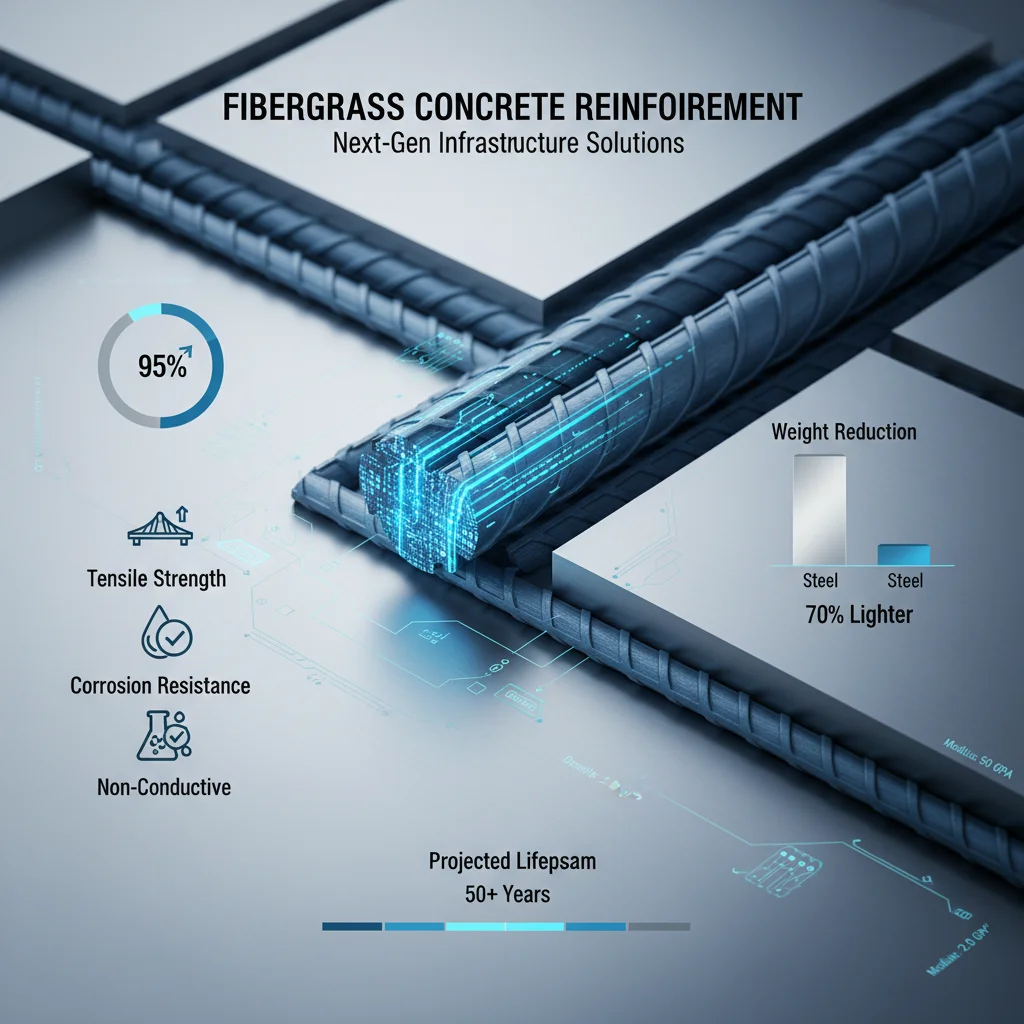
In simple terms, glass fiber reinforced polymer gfrp rebar is a composite material consisting of a high-strength glass fiber core embedded within a thermosetting polymer resin. Unlike steel, which is a homogeneous metal, GFRP is an engineered material designed to leverage the tensile strength of glass and the chemical resistance of polymers. This synergy results in a reinforcement bar that is lightweight, non-conductive, and completely immune to rust.
From a modern industrial perspective, this material is more than just a "plastic rod"; it is a solution to humanitarian and environmental needs. In disaster-prone areas or remote locations where logistics make transporting heavy steel difficult, the lightweight nature of GFRP allows for faster deployment of essential infrastructure. It empowers engineers to build safer harbors, cleaner wastewater facilities, and more resilient roads with less energy expenditure during transport.
The technical meaning of GFRP also extends to its electromagnetic neutrality. Because it does not interfere with magnetic fields, it is the only viable choice for reinforcement in hospitals (MRI rooms), airports, and high-precision research facilities. Thus, glass fiber reinforced polymer gfrp rebar bridges the gap between traditional civil engineering and high-tech material science.
Core Components and Performance Factors
The efficacy of glass fiber reinforced polymer gfrp rebar is determined by its constituent parts. The glass fibers provide the primary load-bearing capacity, while the resin matrix protects the fibers and ensures efficient stress transfer between them. This combination allows for a strength-to-weight ratio that far exceeds that of conventional steel.
Durability is the most critical performance factor. Because glass fiber reinforced polymer gfrp rebar does not oxidize, it eliminates the "spalling" effect where rusting steel expands and cracks the surrounding concrete. This inherent stability ensures that the structural bond remains intact even in the most aggressive alkaline environments.
Furthermore, cost efficiency is realized through the entire lifecycle. While the initial material cost of glass fiber reinforced polymer gfrp rebar may differ from steel, the elimination of epoxy coatings, reduced labor for installation, and near-zero maintenance costs over a 50-to-100-year span create a superior Return on Investment (ROI).
Global Applications and Use Cases
The versatility of glass fiber reinforced polymer gfrp rebar allows it to be deployed across diverse sectors. In marine engineering, it is used extensively for seawalls and piers where saltwater penetration would destroy steel in a few years. In the energy sector, it is ideal for offshore wind turbine foundations and oil platforms, ensuring stability in high-moisture, corrosive environments.
Beyond heavy industry, GFRP is transforming municipal infrastructure. For example, in the construction of fiberglass septic tanks and wastewater treatment plants, glass fiber reinforced polymer gfrp rebar ensures that the structures can withstand both the internal chemical attack of sewage and the external pressure of soil without leaking or degrading.
Performance Comparison of GFRP Rebar Types
Long-Term Value and Sustainability
The adoption of glass fiber reinforced polymer gfrp rebar is a strategic move toward environmental sustainability. Traditional steel production is carbon-intensive; in contrast, the manufacturing of GFRP, while requiring energy, significantly reduces the "lifecycle carbon" of a structure. By eliminating the need for repeated demolition and reconstruction caused by rust, GFRP preserves raw materials and reduces industrial waste.
Beyond the logical benefits of cost and carbon, there is an emotional angle of safety and trust. Infrastructure failure can lead to catastrophic loss of life. By using glass fiber reinforced polymer gfrp rebar, engineers provide a guarantee of longevity and safety to the public. This reliability fosters trust in government infrastructure and ensures that the dignity of urban living is maintained through resilient, long-lasting public works.
Future Trends and Material Innovations
The future of glass fiber reinforced polymer gfrp rebar lies in "smart" composites. Researchers are currently integrating fiber-optic sensors directly into the GFRP rods during the pultrusion process. This allows for real-time structural health monitoring, where the rebar itself can signal when stress levels are too high or if a crack has formed in the concrete, enabling predictive maintenance.
Furthermore, the push toward green energy is driving the development of bio-based resins to replace petroleum-based polymers in GFRP. This innovation will make glass fiber reinforced polymer gfrp rebar fully sustainable, aligning construction practices with global net-zero emissions targets. The integration of recycled glass fibers is also becoming a priority, creating a circular economy within the composites industry.
Automation and 3D printing are also entering the scene. We are seeing the emergence of automated placement systems for GFRP reinforcement, which reduce human error and accelerate construction timelines. As these technologies mature, the cost of glass fiber reinforced polymer gfrp rebar is expected to drop further, making it the default choice for all non-seismic structural applications.
Overcoming Challenges in GFRP Implementation
Despite its advantages, the transition to glass fiber reinforced polymer gfrp rebar faces challenges, primarily due to ingrained industry habits and a lack of standardized codes in some regions. Steel has been the gold standard for over a century, and many contractors are hesitant to switch to a material that behaves differently under tension and cannot be bent on-site.
To overcome this, the industry is focusing on education and the development of comprehensive design guidelines (such as ACI 440 in the US). By providing clear, data-backed installation protocols, the perceived risk is minimized. Additionally, the use of pre-fabricated GFRP cages is solving the "non-bendable" issue, allowing for precise factory-engineered components to be delivered to the site.
Expert insights suggest that the key to mass adoption is a shift in mindset from "initial cost" to "total cost of ownership." When developers realize that glass fiber reinforced polymer gfrp rebar removes the need for future corrosion-related repairs, the financial argument becomes undeniable.
Analysis of GFRP Rebar vs. Traditional Steel Reinforcement
|
Performance Metric
|
Steel Rebar (Standard)
|
GFRP Rebar (Premium)
|
Advantage Score (1-10)
|
| Corrosion Resistance |
Low (Prone to rust) |
Absolute (Immune) |
10 |
| Tensile Strength |
High |
Very High |
9 |
| Weight (Density) |
Heavy |
Lightweight |
10 |
| Magnetic Interference |
High (Conductive) |
None (Neutral) |
10 |
| Initial Material Cost |
Low to Medium |
Medium to High |
4 |
| Lifecycle Cost (50y) |
High (Maintenance) |
Low (Zero Rust) |
9 |
FAQS
The primary advantage is that glass fiber reinforced polymer gfrp rebar is entirely immune to chloride-induced corrosion. In marine environments, salt penetrates concrete and causes steel to rust, which expands and cracks the structure. GFRP eliminates this process entirely, extending the lifespan of piers and seawalls from 20-30 years to over 75 years without major rehabilitation.
No, GFRP is a thermoset composite and cannot be bent once cured. To handle corners and laps, glass fiber reinforced polymer gfrp rebar must be fabricated with the required bends at the factory using specialized heating and molding processes. This encourages more precise engineering and reduces on-site waste and errors.
Yes, it is actually the preferred choice. Because glass fiber reinforced polymer gfrp rebar is non-conductive, it eliminates the risk of electrical conductivity within concrete slabs. This makes it essential for electrical substations, data centers, and industrial plants where electromagnetic interference must be avoided.
GFRP is approximately 1/4 the weight of steel for the same volume. This means a single truck can carry significantly more glass fiber reinforced polymer gfrp rebar than steel, reducing shipping costs and carbon emissions. Additionally, workers can handle the bars more easily, reducing the need for heavy lifting equipment and lowering labor costs.
While the resin is polymer-based, the overall environmental impact is lower over the lifecycle. By preventing structural failure, glass fiber reinforced polymer gfrp rebar drastically reduces the need for new concrete and steel replacements. Furthermore, emerging bio-resins are making the production process increasingly sustainable.
Yes, most glass fiber reinforced polymer gfrp rebar is manufactured with a surface coating—such as sand-coating or ribbed profiles—specifically designed to create a strong mechanical bond with the concrete matrix, ensuring efficient load transfer.
Conclusion
The integration of glass fiber reinforced polymer gfrp rebar into modern construction is not merely a material substitution, but a fundamental upgrade in how we build for the future. By solving the catastrophic issue of corrosion, providing immense tensile strength, and offering a lightweight, non-conductive profile, GFRP ensures that our bridges, roads, and industrial facilities are safer and more sustainable. The shift from a "maintenance-heavy" steel model to a "durability-first" composite model represents the peak of current civil engineering innovation.
Looking ahead, the synergy of smart sensors and bio-resins will further elevate the role of GFRP in the global infrastructure landscape. For developers and engineers, the choice is clear: investing in high-performance composites today prevents the costly failures of tomorrow. We invite you to explore the future of resilient building by visiting our website: www.hbztcomposite.com