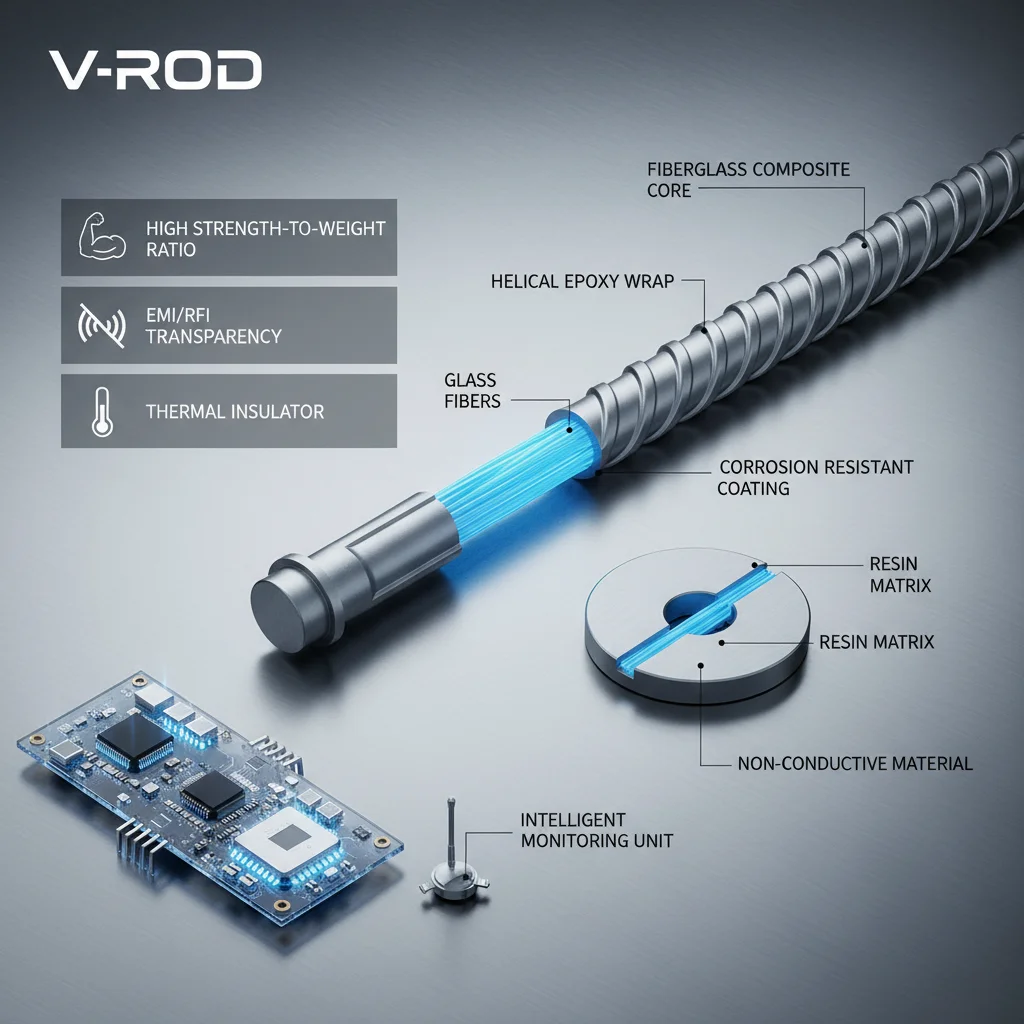
In the modern industrial landscape, the demand for structural materials that can withstand extreme environments without compromising on weight or strength has led to the rise of advanced composite solutions. While traditional metals have served as the backbone of infrastructure for decades, the emergence of high-performance polymers and glass fiber reinforcements has introduced a new era of durability. Understanding the application of these materials is essential for engineers and architects seeking to reduce lifecycle costs and enhance safety in corrosive settings.
The global shift toward sustainable and maintenance-free infrastructure is driving the adoption of Glass Fiber Reinforced Polymer (GFRP) profiles. These materials are engineered to tackle the inherent weaknesses of steel, such as oxidation and chemical degradation, which often plague industrial facilities. By integrating precision pultrusion technology, industries can now deploy structural components that offer an exceptional strength-to-weight ratio, ensuring long-term stability in saltwater or chemical-rich environments.
Among these innovations, the use of specialized structural profiles provides a versatile alternative to traditional molded grating and metallic beams. These fiberglass rectangular tubes are specifically designed for those who require the insulating properties and corrosion resistance of composites without sacrificing the load-bearing capacity needed for heavy-duty industrial frameworks.

Global Industrial Relevance of GFRP Profiles
On a global scale, the deterioration of metal-based infrastructure due to corrosion costs the world economy billions of dollars annually. From offshore oil rigs to urban wastewater treatment plants, the constant battle against rust necessitates frequent painting, galvanization, and eventually, full replacement. The integration of Glass Fiber Reinforced Polymer (GFRP) structural profiles addresses this critical vulnerability by providing a material that is chemically inert to most salts and acids.
As international standards like ISO move toward more sustainable construction practices, the industry is pivoting toward materials that offer longer lifespans with minimal environmental impact. By replacing heavy steel with lightweight, high-strength composites, companies can significantly reduce their carbon footprint during transportation and installation while ensuring that their structural assets remain intact for decades without the need for toxic anti-corrosive coatings.
Defining High-Performance Pultruded Rectangular Tubes
Fiberglass rectangular tubes are high-performance structural profiles engineered from a precision blend of reinforced glass fibers and premium resin. Unlike molded parts, these tubes utilize an advanced pultrusion process, where fibers are continuously pulled through a resin bath and a heated die. This ensures an exceptional longitudinal alignment of fibers, granting the material superior tensile and flexural strength that often rivals traditional metals in specific structural applications.
In simple terms, these tubes serve as the "skeleton" for modern industrial frames, providing a lightweight yet rigid support system. They are designed for versatility and resilience, featuring an inherent resistance to moisture, UV exposure, and chemical attacks. This makes them a superior choice for those who previously relied on molded grating for flooring but now require vertical or horizontal structural bracing.
The connection to modern industry lies in the need for "fit-and-forget" components. By eliminating the risk of oxidation, these pultruded tubes remove the necessity for constant monitoring and maintenance, allowing plant managers to focus on operational efficiency rather than structural decay. This transition is particularly vital for humanitarian and industrial projects in remote regions where maintenance crews are scarce.
Core Engineering Components for Durability
The durability of these profiles stems from the synergy between the glass fiber reinforcement and the polymer matrix. The glass fibers provide the necessary load-bearing capacity, while the resin protects the fibers from environmental degradation. When compared to a standard molded grating system, these rectangular tubes offer higher longitudinal stiffness, making them ideal for beams and supports.
Another key factor is the non-conductive nature of the material. Because the GFRP composition is naturally insulating, it eliminates the risk of electrical shorts and enhances safety in telecommunications and electrical mounting applications. This electrical insulation is a critical advantage over metallic structures, providing a safer environment for technicians working around high-voltage equipment.
Finally, thermal stability ensures that these tubes maintain their dimensional integrity under extreme temperature fluctuations. Unlike aluminum or steel, which expand and contract significantly, fiberglass rectangular tubes exhibit high dimensional stability, preventing warping or bending. This reliability ensures that integrated systems, including those paired with molded grating platforms, remain perfectly aligned over time.
Comparative Performance Analysis
When evaluating the investment return of GFRP versus traditional metals, the most striking difference is the lifecycle cost. While the initial procurement of composite materials may be comparable to high-grade alloys, the total cost of ownership is drastically lower. The elimination of painting and galvanization cycles means that operational expenses are reduced to nearly zero over the lifespan of the product.
Furthermore, the installation speed is significantly accelerated due to the ultra-lightweight profile of the material. This reduces the need for heavy lifting equipment and minimizes labor hours, providing a fast-track solution for urgent industrial upgrades. The following chart illustrates how different composite configurations perform across key industrial metrics compared to traditional structural options.
Structural Performance Rating: Composite vs Traditional
Global Applications in Extreme Environments
The versatility of fiberglass rectangular tubes allows them to be integrated into a wide array of challenging environments. In marine engineering, they are indispensable for docks, offshore platforms, and marine furniture where saltwater would rapidly destroy steel. Similarly, in chemical processing plants, these tubes provide the necessary support for water treatment facilities, resisting the aggressive effects of acids and alkalis that typically degrade concrete and metal.
Beyond heavy industry, these profiles are finding a place in modern architecture and telecommunications. From sleek, lightweight pergolas and facades to non-conductive cable trays for 5G infrastructure, the material's ability to be customized in dimension and color makes it an aesthetic and functional choice. Often, these tubes are used as the primary frame to support molded grating walkways, creating a fully composite, corrosion-proof environment.
Long-Term Value and Sustainability
From a sustainability perspective, the pultrusion process is inherently more efficient than traditional smelting and forging of metals. It minimizes waste and consumes less energy during the manufacturing phase. Furthermore, because GFRP products do not require the application of volatile organic compound (VOC)-heavy paints or toxic galvanization chemicals, they contribute to a healthier environment and safer workplaces.
The long-term value is realized through the sheer extension of the asset's lifespan. In a corrosive environment, a steel beam might need replacement every 5 to 10 years, whereas a fiberglass rectangular tube can last for several decades. This reduction in replacement frequency not only saves capital but also reduces the environmental impact associated with the production and transport of replacement materials.
Ultimately, choosing these composite solutions is an investment in reliability. The peace of mind that comes from knowing a structure will not rust, warp, or conduct electricity is invaluable for safety-critical installations. This shift toward "sustainable durability" is why more global organizations are prioritizing FRP over traditional metallic options for their infrastructure projects.
Future Innovations in Composite Structural Design
The future of composite materials is leaning toward "smart" integration and hybrid reinforcements. We are seeing a trend where GFRP profiles are combined with carbon fiber to create ultra-stiff components that can handle extreme loads while remaining nearly weightless. This evolution will further expand the use of composite tubes in aerospace-adjacent industrial applications and high-speed rail infrastructure.
Digital transformation is also playing a role, with BIM (Building Information Modeling) allowing engineers to simulate the exact stress points of a fiberglass frame before a single piece is cut. This precision ensures that materials are used only where necessary, further reducing waste and optimizing the strength-to-weight ratio of the final build.
As we move toward a greener economy, the development of bio-based resins is expected to make pultruded profiles even more eco-friendly. The goal is to maintain the legendary resistance and strength of molded grating and structural tubes while utilizing renewable feedstocks.
Comparative Analysis of GFRP vs. Traditional Structural Materials
| Material Type |
Maintenance Need |
Corrosion Resistance |
Strength-to-Weight |
| GFRP Rectangular Tube |
Near Zero |
Excellent (Immune) |
Very High |
| Molded Grating (FRP) |
Low |
High |
High |
| Galvanized Steel |
High (Painting) |
Moderate |
Moderate |
| Aluminum Alloy |
Moderate |
Good |
High |
| Stainless Steel |
Low to Moderate |
High |
Low (Heavy) |
| Carbon Fiber Profile |
Very Low |
Excellent |
Extreme |
FAQS
While steel is denser and has higher absolute strength, fiberglass provides a superior strength-to-weight ratio. Through the precision pultrusion process, the fibers are aligned longitudinally to offer high tensile and flexural strength, making it a viable and much lighter alternative for most structural applications where weight reduction is a priority.
Yes. Our fiberglass tubes are specifically designed for outdoor durability. To prevent the resin from degrading under intense sunlight, optional surface veils or gel coats can be applied. This further enhances UV protection, preventing "fiber bloom" and maintaining color stability over many years of exposure.
Absolutely. We offer full customization in terms of dimensions, shapes, lengths, and colors. Whether you need a specific wall thickness for load-bearing requirements or a custom color to match architectural branding, our pultrusion process allows for precise engineering to meet your exact project specifications.
Non-conductivity is critical for safety and signal integrity. It minimizes the risk of electrical shorts and enhances safety for technicians working on mounting supports. Furthermore, it eliminates the need for complex grounding in some scenarios, making it safer and easier to install than metal mounting structures.
Fiberglass rectangular tubes possess excellent dimensional stability. Unlike metals that expand or warp significantly during thermal cycles, GFRP maintains its structural shape even under harsh thermal stress, ensuring that joints and fasteners remain secure without stressing the overall assembly.
Yes. The pultrusion process is energy-efficient and produces minimal waste. Additionally, the long service life reduces the frequency of replacement, and the lack of toxic anti-corrosion coatings (like lead-based paints) makes it a more sustainable and eco-friendly choice for modern infrastructure.
Conclusion
In summary, the transition from traditional metallic structures to Glass Fiber Reinforced Polymer (GFRP) profiles represents a strategic shift toward efficiency, safety, and sustainability. By combining the high tensile strength of glass fibers with the corrosive resistance of premium resins, fiberglass rectangular tubes provide a maintenance-free solution that outlasts steel and aluminum in the most demanding environments. From marine docks to telecom towers, the ability to offer electrical insulation and thermal stability makes these composites the definitive choice for modern engineering.
Looking forward, as industries continue to prioritize the reduction of lifecycle costs and carbon footprints, the adoption of pultruded composites will only accelerate. We encourage engineers and project managers to evaluate their current structural vulnerabilities and consider the long-term dividends of investing in GFRP technology. For high-quality, customizable structural solutions that redefine durability, visit our website: www.hbztcomposite.com.