In the demanding landscape of industrial flooring, the search for materials that balance extreme strength with chemical immunity has led to the widespread adoption of composite solutions. Among these, the specialized application of pultruded grating stands out as a primary choice for facilities where traditional metals fail due to oxidative stress. By leveraging the synergy of high-strength glass fibers and advanced resin systems, these grating systems provide a sustainable and high-performance alternative for critical infrastructure.
The global shift toward reducing maintenance overheads and improving workplace safety has accelerated the transition from galvanized steel to fiber-reinforced polymers. Unlike traditional materials, a high-quality pultruded grating system eliminates the recurring costs of painting and zinc coating, while offering a superior strength-to-weight ratio. This evolution is particularly evident in sectors dealing with aggressive chemicals, saltwater exposure, and high-voltage electrical environments.
Understanding the technical nuances between different manufacturing processes is essential for optimizing operational efficiency. While molded options are excellent for general use, pultruded grating is specifically engineered for heavy-duty load spans and unidirectional structural integrity. By integrating UV inhibitors and fire-retardant resins, these products ensure long-term safety and reliability in the most challenging industrial settings worldwide.

The Industrial Significance of Pultruded Grating
The adoption of pultruded grating represents a paradigm shift in how engineers approach structural flooring in corrosive environments. Traditionally, industries relied on galvanized steel, which, despite its strength, is prone to rust and degradation when exposed to saltwater or acidic fumes. The introduction of fiberglass-reinforced polymers has solved this critical vulnerability, allowing for the creation of walkways and platforms that remain structurally sound for decades without the need for expensive surface treatments.
Beyond mere corrosion resistance, the significance of these composite systems lies in their ability to reduce the overall dead load of a structure. Because they are substantially lighter than steel, they simplify the logistics of transportation and drastically reduce the labor required for on-site installation. This efficiency, combined with non-conductive properties, makes them the gold standard for modern electrical substations and chemical processing plants where safety is non-negotiable.
Technical Definition and Manufacturing Process
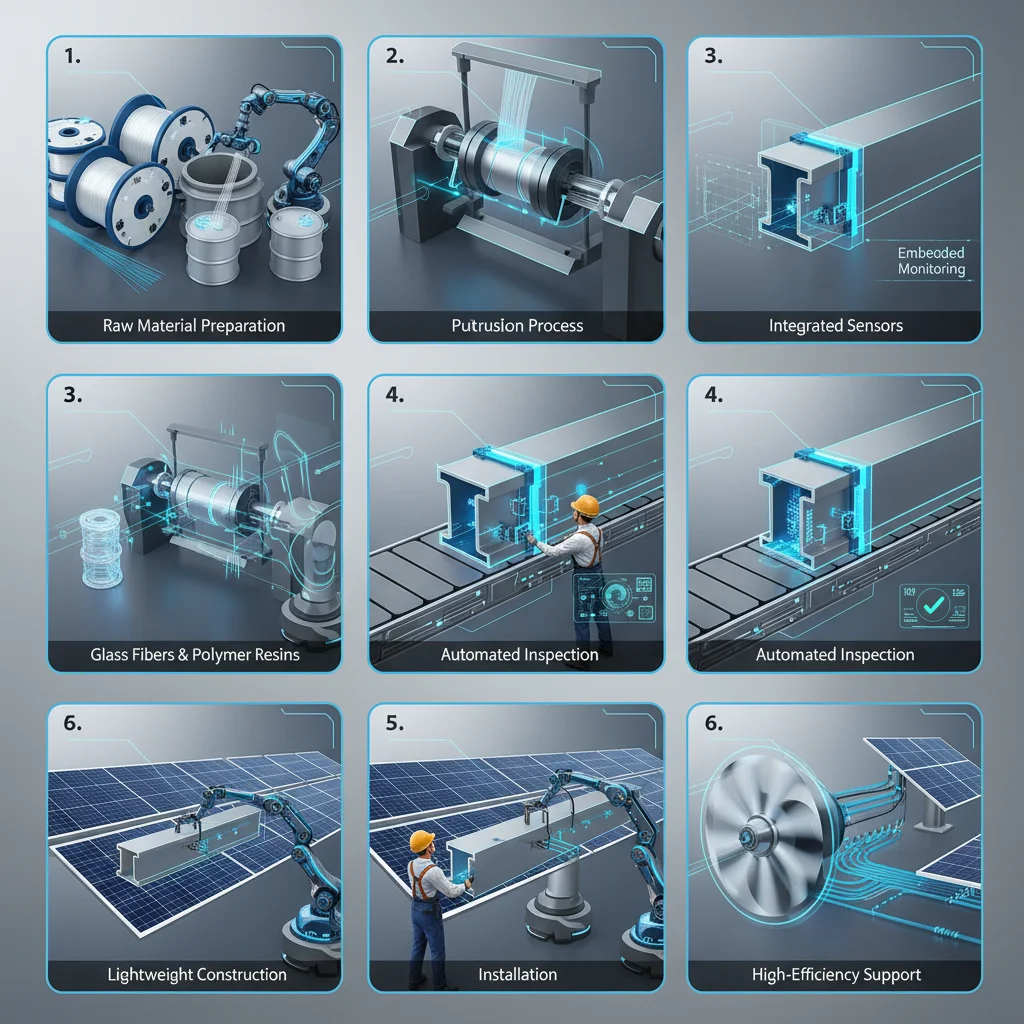
Pultruded grating is a high-performance composite flooring system manufactured through a continuous pulling process. Unlike molded grating, which is pressed into a shape, pultrusion involves pulling reinforced glass fibers through a resin bath and then through a heated die. This process aligns the fibers linearly, resulting in a product with exceptional unidirectional strength and stiffness, making it ideal for applications requiring long spans and high load-bearing capacities.
The synergy between the reinforcement fibers and the polymer matrix is what gives the material its unique properties. The glass fibers provide the necessary tensile strength and structural rigidity, while the resin—typically polyester, vinyl ester, or phenolic—acts as the binder and provides the primary defense against chemical attack. This molecular bond ensures that the grating does not delaminate or warp under extreme industrial stress.
By controlling the curing process within the heated die, manufacturers can ensure dimensional accuracy and consistent mechanical properties across every linear meter of the product. This precision allows for seamless integration into existing industrial frameworks, ensuring that the grating fits perfectly within structural supports while maintaining the rigorous safety standards required by international building codes.
Core Components and Material Selection
Selecting the right resin is the most critical step in specifying a pultruded grating system. For general industrial use, polyester resins offer a cost-effective solution with good overall durability. However, for environments exposed to aggressive acids, alkalis, or organic solvents, vinyl ester resins are recommended due to their superior chemical resistance and higher mechanical toughness.
The structural integrity of pultruded grating is further enhanced by the integration of specialized additives. UV inhibitors are incorporated into the resin system to prevent the degradation of the polymer chain caused by prolonged sunlight exposure, which prevents "fiber blooming" and maintains the aesthetic and structural quality of the flooring in outdoor installations.
Surface finishes also play a vital role in operational safety. To prevent workplace falls, these grating systems often feature concave surfaces or bonded grit anti-slip coatings. These textures provide maximum traction even in the presence of oils, water, or ice, ensuring that personnel can move safely across the platform regardless of the environmental conditions.
Structural Performance and Load Capacity
The primary technical advantage of pultruded grating is its exceptional load-bearing capacity in the longitudinal direction. Because the glass fibers are oriented linearly during the pultrusion process, the material can support significantly heavier weights over longer spans compared to molded composites. This makes it the preferred choice for heavy-duty structural applications where platform deflection must be kept to a minimum.
When evaluating structural performance, engineers consider the strength-to-weight ratio, which is remarkably higher in these composites than in traditional aluminum or steel. This allows for the design of lighter supporting structures without compromising the safety or stability of the walkway, ultimately reducing the total cost of the engineering project.
Load Capacity Comparison for Pultruded Grating Variants
Global Applications in Harsh Environments
Pultruded grating is extensively deployed in wastewater treatment plants and chemical processing facilities where the atmosphere is saturated with corrosive gases and liquids. In these settings, the inert nature of the composite material prevents the structural failure that typically plagues metal gratings, ensuring that maintenance crews can access critical equipment safely without the risk of flooring collapse.
In marine environments, such as docks, offshore oil rigs, and piers, these products are indispensable. The constant exposure to saltwater and humidity triggers rapid oxidation in steel; however, the fiberglass-reinforced polymer remains unaffected. Additionally, the non-conductive properties are utilized in power plants and electrical substations to eliminate the risk of electrical conductivity, providing a safe working surface for technicians.
Long-Term Economic and Safety Value
The initial investment in pultruded grating is often offset by the dramatic reduction in lifecycle costs. When comparing the total cost of ownership over a 20-year period, the lack of required painting, galvanizing, or rust treatment makes the composite option far more economical. The durability of the resin matrix ensures that the product resists fatigue and wear, eliminating the need for frequent replacements.
From a safety perspective, the value is immeasurable. The availability of bright safety colors, such as yellow and orange, enhances visibility in low-light industrial zones, helping to prevent accidents. When combined with the bonded grit anti-slip surfaces, the risk of slip-and-fall incidents—one of the leading causes of industrial workplace injuries—is significantly mitigated.
Furthermore, the lightweight nature of the material improves ergonomic safety during installation. Workers are less likely to suffer from strain or injury when handling composite panels compared to heavy steel sections. This efficiency accelerates project timelines and reduces the reliance on heavy lifting machinery, streamlining the entire construction process.
Comparative Analysis: FRP vs Traditional Steel
The transition from steel to composite flooring is driven by a logical analysis of material performance in extreme conditions. Steel gratings, while possessing high raw strength, suffer from a fundamental weakness: susceptibility to corrosion. Even with hot-dip galvanizing, the protective layer eventually fails, leading to rust that compromises the structural integrity of the entire walkway.
In contrast, pultruded grating is inherently immune to the electrochemical process of rusting. It does not react with saltwater or common industrial acids, meaning the material properties remain constant throughout its lifespan. This reliability provides peace of mind for facility managers who must adhere to strict safety audits and operational uptime requirements.
When analyzing the installation phase, the differences are even more pronounced. The high strength-to-weight ratio of FRP means that fewer supports may be needed in some configurations, and the speed of installation is significantly increased. This reduces labor costs and minimizes the downtime of the facility during upgrades or repairs.
Comparative Performance Metrics: Pultruded Grating vs Galvanized Steel
| Performance Metric |
Galvanized Steel |
Pultruded Grating |
Industrial Impact |
| Corrosion Resistance |
Low (Rusts) |
Excellent (Inert) |
Zero Rusting |
| Installation Speed |
Slow (Heavy) |
Fast (Light) |
Reduced Labor Cost |
| Maintenance Cost |
High (Painting) |
Very Low |
Lower OPEX |
| Electrical Safety |
Conductive |
Non-Conductive |
Eliminated Shock Risk |
| Lifespan (Marine) |
Short-Medium |
Long-Term |
Infrastructure Stability |
| Weight Ratio |
100% (Base) |
~30-40% of Steel |
Simplified Logistics |
FAQS
Molded grating is produced by pressing the material into a mold, providing bi-directional strength and excellent impact resistance, which is ideal for general walkways. Pultruded grating is manufactured by pulling fibers through a die, resulting in much higher load-bearing capacity in the longitudinal direction, making it suitable for long spans and heavy-duty industrial loads.
Our FRP gratings are manufactured with integrated UV inhibitors within the resin system. This chemical additive prevents the polymer from breaking down under prolonged sunlight, ensuring that the structural integrity and the safety colors of the grating remain intact without fading or cracking over time.
Yes, it is highly recommended for food processing environments. Due to its resistance to moisture and harsh cleaning chemicals, it does not corrode or harbor bacteria. Its non-porous surface helps maintain strict sanitation standards and resists the growth of corrosive residues common in food production.
For environments with aggressive chemical exposure or highly acidic fumes, Vinyl Ester resin is the superior choice over standard Polyester. Vinyl Ester provides a higher level of chemical resistance and better mechanical toughness, ensuring the grating does not degrade in the presence of corrosive agents.
Absolutely. We offer concave surface designs and bonded grit coatings specifically engineered for maximum traction. These features are designed to displace liquids and provide a mechanical grip, significantly reducing the risk of slips and falls in wet, oily, or icy industrial conditions.
Saltwater causes rapid oxidation and pitting in steel, even when galvanized. FRP is naturally inert to saltwater and humidity. By using pultruded grating, marine operators eliminate the need for constant rust treatment and painting, ensuring a permanent structural solution that maintains safety standards for decades.
Conclusion
The integration of pultruded grating into industrial infrastructure marks a decisive move toward efficiency, safety, and sustainability. By combining the linear strength of glass fibers with the chemical resilience of advanced resins, these composite systems solve the age-old problem of corrosion while reducing maintenance costs and installation labor. From the non-conductive requirements of power plants to the saltwater resistance needed for marine docks, the versatility of this material ensures it remains a superior alternative to traditional metal flooring.
As industrial standards continue to evolve toward greener and more durable materials, the role of high-performance composites will only expand. Investing in the correct resin and structural configuration today ensures a safer working environment and a significantly lower total cost of ownership for the future. We invite you to explore how these advanced solutions can optimize your facility. Visit our website: www.hbztcomposite.com