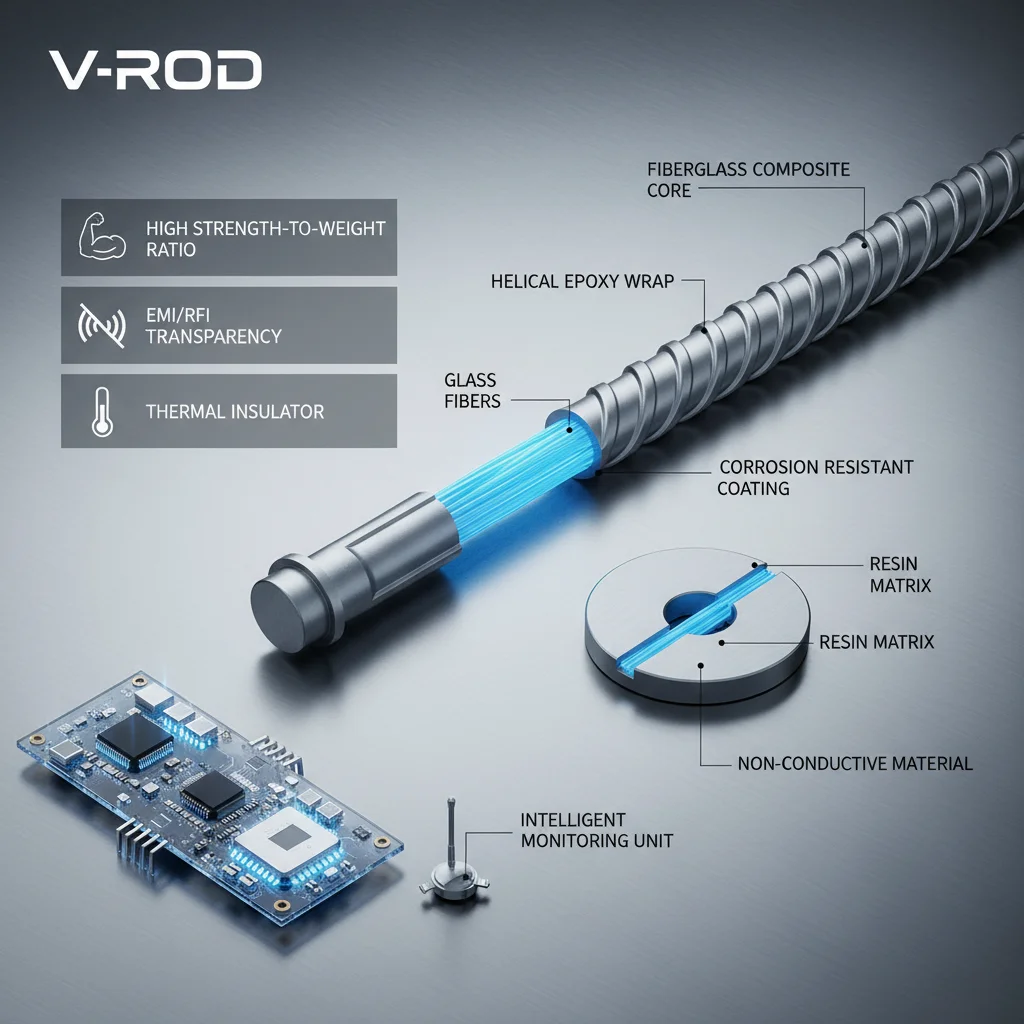
The global construction and industrial sectors are currently witnessing a pivotal shift toward high-performance composite materials to combat the escalating costs of infrastructure degradation. Understanding the factors that influence the fiberglass rebar price and the broader value proposition of FRP materials is essential for engineers aiming to optimize their project budgets without sacrificing structural integrity.
As traditional steel reinforcement continues to face challenges related to corrosion and high maintenance overheads, the industry is increasingly analyzing the long-term investment return of composites. While the initial acquisition cost may vary, the total cost of ownership is often significantly lower due to the elimination of rust-proofing treatments and reduced installation labor.
For professionals seeking a balance between mechanical strength and economic efficiency, navigating the fiberglass rebar price landscape requires a deep dive into material specifications, manufacturing processes like pultrusion, and the specific environmental demands of the project site.

The Economic Fundamentals of Composite Reinforcement
The market valuation of fiber-reinforced polymers is not merely about the raw material cost but reflects the integration of high-strength glass fibers and specialized polymer resins. When engineers evaluate the fiberglass rebar price, they are essentially investing in a material that is immune to the electrochemical process of corrosion, which typically destroys steel-reinforced concrete in marine or industrial settings.
Furthermore, the lightweight nature of these products dramatically reduces transportation and logistics costs. Because FRP tubes and bars weigh only a fraction of their metal counterparts, the overall project expenditure is lowered through reduced heavy-lifting equipment rentals and faster onsite deployment, effectively offsetting any initial premium in the material price.
Core Components Affecting Material Valuation
Precision pultrusion technology serves as the backbone of quality control, ensuring that fibers are aligned longitudinally to maximize tensile and flexural strength. The complexity of this automated process, combined with the quality of the resin matrix used, directly influences the final market price and the resulting structural reliability of the product.
Customization options also play a significant role in pricing strategies. Whether a project requires a specific diameter, wall thickness, or a specialized UV-resistant outer coating to prevent brittleness under prolonged sunlight, these tailored engineering specifications ensure that the material is optimized for the exact load requirements of the site.
Finally, the sourcing of raw materials—specifically high-strength glass fibers—impacts consistency. Strict quality control during the material sourcing phase prevents dimensional instability, ensuring that the product maintains a smooth, uniform surface profile that is easier to integrate into hybrid structures without the need for expensive welding.
Mechanical Properties and Market Value
One of the primary drivers of the fiberglass rebar price is the exceptional strength-to-weight ratio provided by the pultrusion process. By aligning fibers in a perfect circular profile, these tubes can withstand high mechanical loads, including torsion and vibration, which are often catastrophic for cheaper, non-reinforced plastics.
The non-conductive nature of fiberglass makes it an indispensable asset for utility sectors. When comparing the fiberglass rebar price to aluminum or steel, the added value lies in electrical safety and insulating properties, making them the preferred choice for telecommunication installations and electrical support structures.
Environmental resistance is another critical factor that justifies the investment. The ability to resist saltwater and chemical degradation means that the long-term maintenance cost is virtually zero, providing a financial advantage that far outweighs the initial fiberglass rebar price.
Comparing Lifetime Costs of FRP vs Steel
When analyzing the financial viability of a project, it is a mistake to look only at the purchase price. Traditional steel tubing requires frequent painting and coating to prevent oxidation, whereas fiberglass round tubes are naturally immune to rust. This eliminates the need for recurring maintenance cycles throughout the structure's lifespan.
Moreover, the installation speed of lightweight composites reduces labor costs. Since these materials can be cut and drilled using standard tools and do not require heavy lifting machinery, the time from delivery to completion is significantly compressed, offering a hidden saving that balances the initial fiberglass rebar price.
Comparative Value Rating: Fiberglass vs Traditional Materials
Global Applications in Harsh Environments
In marine and coastal regions, the saline atmosphere renders traditional metals obsolete within a few years. Fiberglass round tubes provide a permanent solution for piers, boardwalks, and offshore platforms, where the immunity to saltwater ensures that the structural integrity remains intact for decades.
Industrial chemical plants also benefit from the chemical-resistant properties of FRP. By utilizing materials that do not react with acids or bases, facility managers can reduce the risk of catastrophic failure and lower the insurance premiums associated with corrosive environments, making the fiberglass rebar price a strategic hedge against future repair costs.
Innovations in Pultrusion Technology
Modern precision pultrusion has evolved to allow for tighter dimensional tolerances and more consistent fiber distribution. This technological leap ensures that every tube produced has the same mechanical properties, reducing the safety margins engineers must build into their designs and allowing for more efficient material usage.
Integration of UV-stabilized resins has further extended the lifespan of these products. By preventing the polymer matrix from breaking down under extreme sunlight, the materials avoid the common pitfalls of discoloration and brittleness, maintaining their impact strength even in desert or tropical climates.
The shift toward automated cutting and drilling systems has also minimized material waste. This operational efficiency allows manufacturers to offer more competitive pricing while maintaining the high standards required for industrial-grade infrastructure, directly influencing the accessibility of the fiberglass rebar price for smaller projects.
Strategic Investment Analysis for Infrastructure
Evaluating the return on investment (ROI) for composite materials requires a transition from "Capex thinking" to "Life-cycle thinking." While the initial procurement cost might be higher than steel, the removal of the need for cathodic protection and epoxy coatings creates a significant financial surplus over a 20-year horizon.
Furthermore, the reduction in foundation costs is a critical but often overlooked benefit. Because FRP tubes are ultra-lightweight, the load on the foundation is decreased, allowing for simpler foundation designs and reduced concrete volume, which lowers the total project cost.
Ultimately, the decision to invest in high-performance fiberglass is a decision for sustainability and safety. By choosing materials that do not rust or conduct electricity, industries protect their human assets and ensure that their infrastructure remains functional without the constant need for disruptive maintenance.
Comparison of FRP Round Tubes vs Traditional Steel Tubing
| Feature |
Fiberglass Round Tube |
Traditional Steel |
ROI Impact |
| Maintenance Cost |
Very Low |
High (Painting/Coating) |
Significant Saving |
| Installation Speed |
Rapid (Lightweight) |
Slow (Heavy Equipment) |
Reduced Labor Cost |
| Service Life |
Extremely Long |
Moderate (Oxidizes) |
Extended Asset Life |
| Weight Penalty |
Minimal |
Heavy |
Lower Foundation Cost |
| Electrical Safety |
Safe (Insulating) |
Risky (Conductive) |
Reduced Risk Liability |
| Corrosion Resistance |
Immune |
Prone to Rust |
Eliminates Replacement |
FAQS
Pultrusion aligns the glass fibers longitudinally, which maximizes the tensile and flexural strength, allowing the tubes to resist bending and torsion under heavy loads. While this automated precision adds to the initial fiberglass rebar price, it eliminates the weaknesses found in extruded plastics and ensures a consistent, high-performance product that reduces the need for over-engineering.
Yes, fiberglass round tubes offer superior corrosion resistance, especially in saltwater or chemical environments, where aluminum can still pit or corrode. Additionally, they are completely non-conductive, providing an added layer of safety for electrical installations that aluminum cannot provide, making them a more secure long-term investment.
Absolutely. They can be manufactured in various diameters, wall thicknesses, lengths, and colors to meet precise engineering and aesthetic requirements. This flexibility allows designers to optimize the material for the specific load and environment of the project, ensuring that the cost is aligned perfectly with the required performance.
No, one of the greatest cost-saving advantages is that fiberglass round tubes can be cut, drilled, and mechanically fastened using standard tools. This makes installation much simpler and significantly cheaper than welding metal, which requires specialized certification and expensive equipment.
Our tubes feature UV-resistant surfaces that prevent the polymer matrix from becoming brittle or discolored under prolonged sun exposure. This ensures that the structural integrity remains intact for several decades, preventing the need for premature replacement and maintaining a low total cost of ownership.
They are widely used as utility poles, conduit tubing, protective barriers, and support structures in electrical and telecommunication installations. Their insulating properties and resistance to environmental stress make them safer and more durable than traditional wood or metal poles.
Conclusion
In conclusion, while the initial fiberglass rebar price may reflect a premium over basic materials, the long-term financial and structural advantages are undeniable. By eliminating corrosion, reducing maintenance costs, and simplifying installation through lightweight design, FRP composites provide a superior return on investment for any modern infrastructure project.
Looking forward, the transition toward sustainable and durable materials is not just a trend but a necessity for global infrastructure resilience. We recommend that engineers and project managers prioritize life-cycle value over initial procurement costs to ensure a safe, efficient, and low-maintenance future. Visit our website: www.hbztcomposite.com