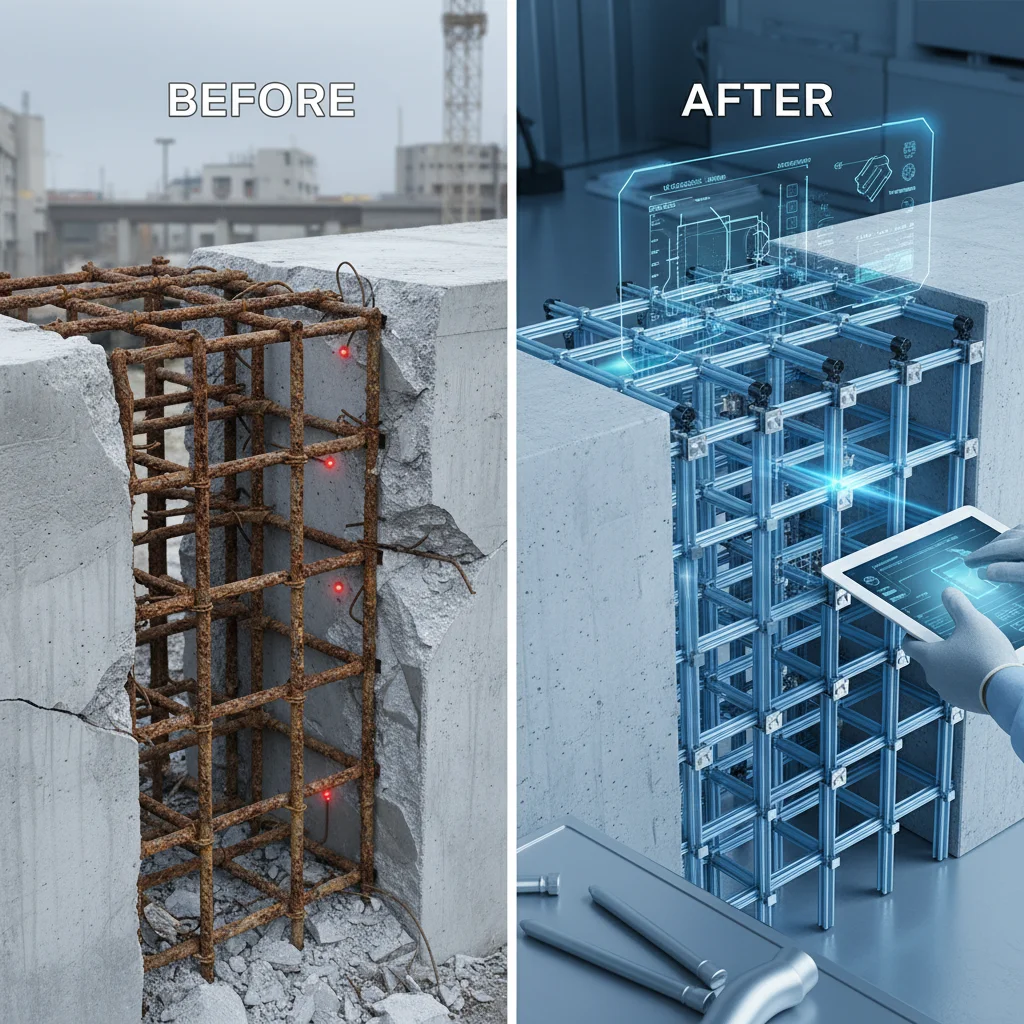
Structural integrity in aggressive environments often faces a recurring enemy: electrochemical corrosion. For decades, traditional steel reinforcement has been the standard, yet its vulnerability to moisture and chlorides creates a predictable lifecycle of degradation and costly repair. The emergence of v rod fiberglass rebar offers a fundamental shift in how engineers approach reinforcement, replacing metallic susceptibility with composite stability.
Unlike conventional bars, these fiberglass-reinforced polymer (FRP) rods are engineered to withstand the harshest chemical exposures without the risk of oxidation. By leveraging high-strength glass fibers embedded in a specialized resin matrix, this technology eliminates the need for thick concrete cover typically required to protect steel from rust, thereby allowing for leaner and more efficient structural designs.
For procurement managers and civil engineers, the transition to composite reinforcement is no longer just about initial material costs, but about the total cost of ownership. Understanding the technical nuances of GFRP (Glass Fiber Reinforced Polymer) is essential for implementing infrastructure that maintains its load-bearing capacity for decades without systemic failure.

Technical Composition and the Mechanics of FRP Reinforcement

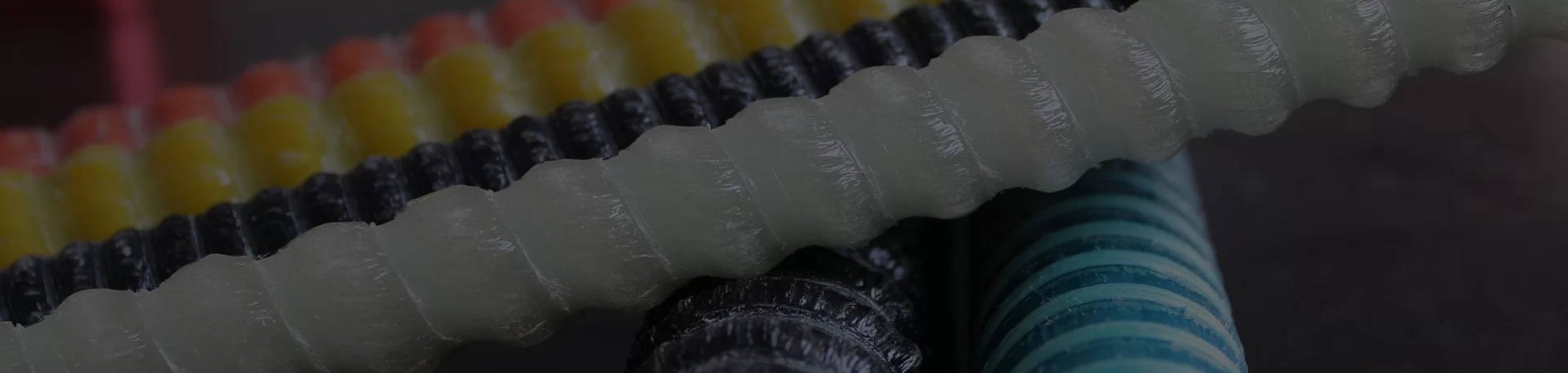
At its core, v rod fiberglass rebar is a composite material consisting of high-strength glass fibers that provide tensile strength, bonded together by a thermosetting polymer resin. This resin matrix serves two critical purposes: it protects the fibers from environmental damage and ensures the efficient transfer of stress between the fibers, allowing the rod to handle significant axial loads.
The manufacturing process typically involves pultrusion or filament winding, ensuring that the fibers are aligned longitudinally. This alignment is what gives the rebar its exceptional longitudinal strength. Because it is non-conductive and non-magnetic, it does not interfere with electromagnetic equipment, making it an ideal choice for hospitals, MRI rooms, and specialized industrial facilities.
From a materials science perspective, the lack of a crystalline structure—unlike steel—means that the material does not "fatigue" in the same way under certain corrosive stresses. The result is a reinforcement solution that is significantly lighter than steel but possesses a higher tensile strength-to-weight ratio, reducing the dead load of the structure.
Core Performance Advantages Over Conventional Steel Rebar
The primary value proposition of GFRP reinforcement lies in its absolute immunity to electrochemical corrosion. In environments where salt, acids, or alkalis are present, steel rebar inevitably oxidizes, expanding in volume and causing the surrounding concrete to spall and crack. Fiberglass rebar removes this failure mechanism entirely.
Beyond corrosion resistance, the lightweight nature of the material simplifies logistics and on-site handling. Workers can maneuver composite rods more easily than heavy steel, which reduces labor costs and minimizes the risk of workplace injuries during the placement phase of construction.
Furthermore, the thermal expansion coefficient of GFRP is closer to that of concrete than steel is. This reduces the internal thermal stresses that occur during temperature fluctuations, which helps in preventing micro-cracks from forming in the concrete matrix over long-term environmental cycling.
Strategic Application Scenarios in Modern Civil Engineering
The most critical application for v rod fiberglass rebar is in marine and coastal infrastructure. Seawalls, piers, and bridge decks are constantly exposed to chloride-rich environments that rapidly degrade steel. By utilizing composite reinforcement, these structures can avoid the expensive "patch-and-repair" cycles common in coastal engineering.
In municipal wastewater management, such as the construction of integrated sewage pumping stations, the presence of hydrogen sulfide (H₂S) creates a highly acidic environment. GFRP is naturally resistant to these chemical attacks, ensuring that the structural walls of the station remain watertight and stable without requiring frequent internal epoxy coatings.
Additionally, the material is widely adopted in pavement reinforcement for airport runways and industrial flooring. These surfaces often face heavy chemical spills or de-icing salts; using fiberglass rebar prevents the subsurface corrosion that typically leads to potholes and surface slabs cracking.
Comparative Analysis of Material Longevity and Stress Resistance
When evaluating the performance of reinforcement, we must look at the balance between tensile strength, corrosion rate, and weight. While steel has a higher modulus of elasticity, GFRP outperforms it in environments where durability is the primary KPI. The following metrics illustrate the relative efficiency of composite rods compared to industry-standard treated steel.
The data emphasizes that while steel may be stiffer, the "effective life" of the reinforcement in a corrosive environment is where fiberglass gains its strategic edge. The reduction in maintenance frequency directly correlates to the material's chemical stability.
v rod fiberglass rebar Performance Metrics
As shown, the corrosion resistance and weight-to-strength efficiency are markedly higher for v rod fiberglass rebar. Although the elasticity is lower, for the majority of civil engineering applications, the tensile strength provided by GFRP is more than sufficient to meet safety codes while providing a vastly superior lifespan.
Critical Implementation Factors for Composite Installation
Implementing GFRP is not a simple "one-to-one" replacement of steel; it requires a shift in engineering calculations. Because composite rebar is linear-elastic until failure (meaning it does not yield like steel), designers must apply different safety factors to ensure structural ductility is managed through other means.
During installation, it is important to note that fiberglass rebar cannot be bent on-site using heat or mechanical rollers. All bends and stirrups must be prefabricated by the manufacturer. This necessitates a high degree of accuracy in the project's shop drawings and a strict inventory management system to ensure the right shapes arrive at the right time.
Handling also differs; while the material is robust, excessive point-loading or dragging against sharp abrasive surfaces during placement can damage the outer resin layer. Following manufacturer guidelines for support chairs and spacing is essential to maintain the designed concrete cover and ensure proper bonding between the rod and the cement.
Future Directions in Non-Metallic Reinforcement Technology
The industry is moving toward "Hybrid Reinforcement" systems, where GFRP and carbon fiber are used selectively within a single structure. By placing carbon fiber in high-stress zones and v rod fiberglass rebar in areas where corrosion resistance is the priority, engineers can optimize both cost and performance.
Furthermore, advances in resin chemistry are likely to increase the temperature thresholds of these materials, expanding their use in high-heat industrial environments. We are also seeing a trend toward "smart" composite rebar, where embedded sensors can monitor structural health in real-time, providing alerts before micro-cracks reach a critical state.
As sustainability becomes a mandate, the carbon footprint of GFRP production is being scrutinized and improved. Compared to the energy-intensive smelting of steel and the constant need for repair-based concrete replacement, composite systems offer a compelling long-term environmental narrative through reduced lifecycle waste.
Decision Matrix for Selecting GFRP vs Alternative Materials
Choosing the right reinforcement requires a cold analysis of the operating environment. If the project is a standard indoor residential building with low humidity, the cost-benefit of GFRP may be negligible. However, in industrial or exposed settings, the math changes completely.
The following matrix provides a framework for decision-makers to evaluate when v rod fiberglass rebar is the optimal technical choice compared to traditional alternatives like black steel, epoxy-coated steel, or stainless steel.
| Environment Type | Steel Performance | GFRP Performance | Recommended Choice |
|---|---|---|---|
| Coastal/Marine | High Corrosion Risk | Immune to Chlorides | GFRP |
| Chemical Plant | Acidic Degradation | High Chemical Resistance | GFRP |
| MRI/Hospital | Magnetic Interference | Non-Magnetic | GFRP |
| Standard Dry Interior | Stable/Cost-Effective | Over-Engineered | Steel |
| Heavy Industrial Floor | Pitting/Spalling Risk | Stable Surface Support | GFRP |
| High-Rise Core | High Modulus Needed | Lower Stiffness | Steel/Hybrid |
Ultimately, the selection should be driven by the intended service life of the asset. For projects designed for a 50+ year horizon in aggressive environments, the initial investment in composite materials is recovered through the total elimination of structural corrosion maintenance.
Frequently Asked Questions
Conclusion
The transition from steel to v rod fiberglass rebar represents a strategic move toward sustainable, low-maintenance infrastructure. By addressing the root cause of concrete failure—corrosion—composite reinforcement allows for the creation of assets that are not only more durable but also more efficient to install and manage over their entire lifecycle.
For engineers and procurement professionals seeking to modernize their material specifications, reviewing the capabilities of high-performance GFRP is a critical step. Further technical specifications and company capabilities can be explored through the official resources at www.hbztcomposite.com.