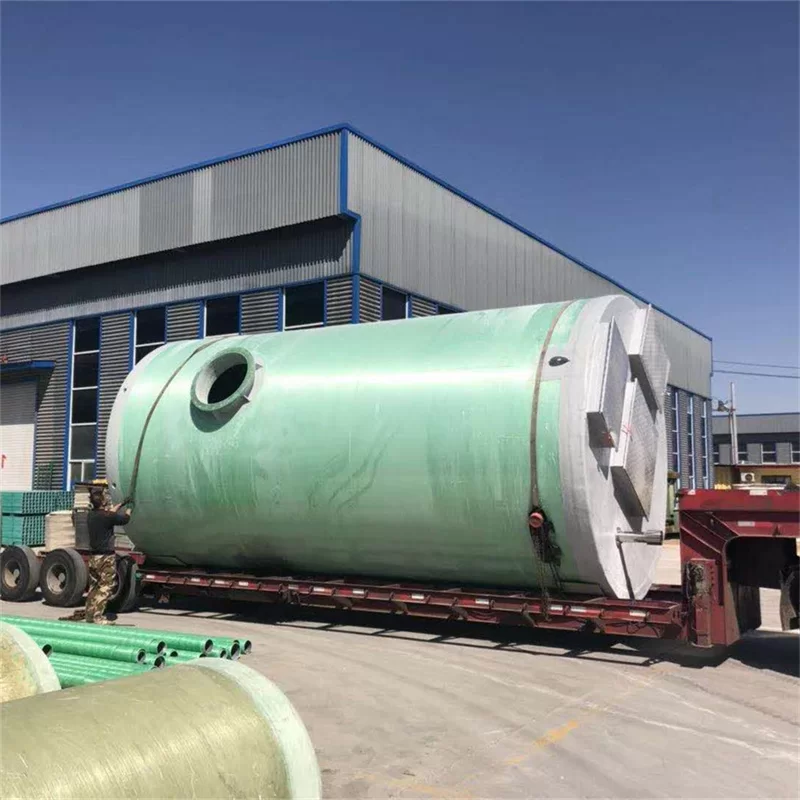
Choosing the Right carbon fiber thick plate or board for Industrial Applications
Engineers and project managers consistently face a critical structural dilemma: sourcing heavy-duty materials that deliver uncompromising rigidity without introducing excessive dead weight. Traditional metallic plates are highly susceptible to corrosion, while standard composites often lack the sheer compressive and tensile strength required for extreme, heavy-load environments. This balancing act can lead to project delays, ballooning maintenance budgets, and structural vulnerabilities over time.
Advanced material engineering provides a definitive answer. By leveraging decades of specialized manufacturing experience in custom composite solutions, our facilities utilize state-of-the-art compression molding and pultrusion technologies to engineer a carbon fiber thick plate or board that eliminates these compromises. Operating from a modern production hub equipped with stringent quality management systems, we deliver materials that boast exceptional strength-to-weight ratios and anti-aging properties. This ensures absolute durability and corrosion resistance, successfully supporting large-scale engineering projects across demanding sectors like chemical processing, advanced construction, and wastewater treatment.
Engineering Standards for carbon fiber thick plate or board
Understanding the precise technical metrics behind structural composites is essential for safe and effective deployment. The fabrication of high-grade polymer components requires meticulous control over the fiber matrix, resin infusion, and curing environment. Through integrated manufacturing capabilities encompassing precise molding and hand lay-up processes, the final output meets stringent international industrial standards.
Below are the specific performance benchmarks that distinguish a premium carbon fiber thick plate or board and demonstrate why global industries rely on our engineering specifications:
| Performance Metric |
Industry Significance |
Our Engineering Standard |
Advantage |
| Strength-to-Weight Ratio |
Determines load-bearing efficiency without adding structural mass. |
High-density carbon matrix integration. |
Provides steel-like rigidity while being significantly lighter, easing installation. |
| Corrosion Resistance |
Dictates lifespan in harsh chemical and wastewater environments. |
Advanced anti-aging epoxy formulation. |
Zero structural degradation when exposed to industrial solvents or weather elements. |
| Dimensional Stability |
Ensures precision fitting in large-scale engineering structures. |
Strictly monitored compression molding process. |
Eliminates warping, shrinking, or thermal expansion in varying climates. |
| Global Compliance |
Guarantees export reliability for diverse regulatory markets. |
Comprehensive Quality Management System. |
Seamless and certified integration for projects in Europe, North America, and the Middle East. |
Maximizing ROI with a High-Performance carbon fiber thick plate or board
Strategic procurement has evolved beyond simply analyzing the initial purchase price; forward-thinking leaders evaluate the total lifecycle cost of their structural assets. Deploying an industrial-grade carbon fiber thick plate or board drastically reduces ongoing maintenance cycles, minimizes replacement frequencies, and dramatically cuts down on the heavy lifting equipment required during the initial installation phase.
Over a standard operational lifespan, facilities across Southeast Asia, North America, and the Middle East experience exponential financial savings. The inherent anti-aging and anti-corrosive properties mean that infrastructure built today will continue to perform flawlessly for decades, transforming upfront material investments into measurable, long-term operational profitability.
Related products
Benefits of Durable Concrete Fiberglass Rebar for Infrastructure
The evolution of modern infrastructure has led to a critical search for materials that can withstand the harshest environmental conditions without compromising structural integrity. Among the most promising innovations is concrete fiberglass rebar , a high-performance alternative to traditional steel reinforcement that eliminates the age-old problem of corrosion. By integrating advanced composite technology into the very core of our buildings and bridges, the construction industry is shifting toward a more sustainable and durable paradigm. Globally, the degradation of reinforced concrete due to saltwater ingress and chemical attacks costs billions of dollars in maintenance and premature demolition annually.
High Strength and Corrosion Resistant glass fibre reinforcement bars
The evolution of modern infrastructure has reached a critical turning point where traditional materials are no longer sufficient to meet the demands of extreme environments. Among the most innovative solutions emerging is the use of glass fibre reinforcement bars, which provide a high-strength, corrosion-resistant alternative to conventional steel rebar. By integrating advanced polymer chemistry with high-tensile glass fibers, these components are redefining the longevity of concrete structures globally. Understanding the technical superiority of these composite materials is essential for engineers and architects aiming to reduce maintenance costs and environmental impact.
Reliable frp walkway manufacturer for Industrial Flooring Solutions
Selecting a reliable frp walkway manufacturer is a critical decision for industries operating in harsh environments where traditional materials like steel and aluminum fail. Fiber Reinforced Polymer (FRP) has emerged as the gold standard for industrial flooring and walkways due to its extraordinary resistance to corrosion and high strength-to-weight ratio, ensuring operational safety and longevity. In the global push toward sustainable infrastructure, the role of an experienced frp walkway manufacturer extends beyond mere production; it involves engineering solutions that reduce lifecycle costs and minimize environmental impact.
Sustainable Construction with High Strength gfrp rebars Guide
The construction industry is currently witnessing a paradigm shift toward sustainable and corrosion-resistant materials, with gfrp rebars emerging as a leading alternative to traditional steel reinforcement. As urban infrastructure faces increasingly harsh environmental conditions, the need for materials that can withstand chloride penetration and oxidation has never been more critical. Understanding the technical superiority of glass fiber reinforced polymer (GFRP) bars allows engineers to significantly extend the lifecycle of concrete structures while reducing long-term maintenance costs. By leveraging the high tensile strength and lightweight nature of these composites, the industry is moving toward a more resilient form of architecture.
The carbon fiber thick plate we ordered exceeded our expectations. It offered the perfect balance of extreme rigidity and low weight for our custom structural project. Highly recommended!
13 March 2026
We used this board in a highly corrosive chemical processing facility. The anti-aging and corrosion resistance properties are phenomenal. It is holding up perfectly where traditional steel would have failed.
13 March 2026
Working with this carbon fiber board was surprisingly smooth. The dimensional stability is top-notch with zero warping, making our large-scale installation process much faster and incredibly precise.
13 March 2026
Fantastic quality and great ROI. Despite the heavy-duty load requirements of our construction project, these thick plates handle the stress effortlessly. Will definitely be sourcing from them again for future builds.
13 March 2026