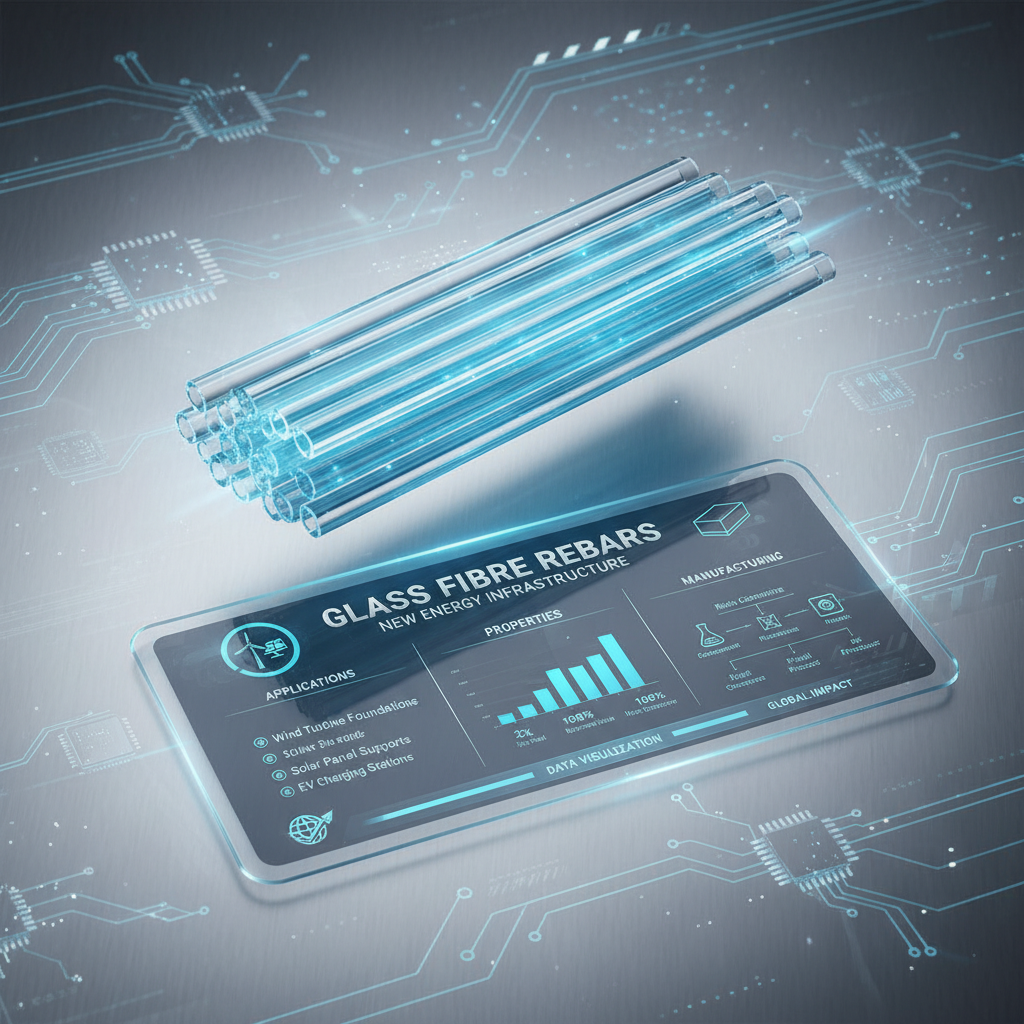
The evolution of modern infrastructure has reached a critical turning point where traditional materials are no longer sufficient to meet the demands of extreme environments. Among the most innovative solutions emerging is the use of glass fibre reinforcement bars, which provide a high-strength, corrosion-resistant alternative to conventional steel rebar. By integrating advanced polymer chemistry with high-tensile glass fibers, these components are redefining the longevity of concrete structures globally.
Understanding the technical superiority of these composite materials is essential for engineers and architects aiming to reduce maintenance costs and environmental impact. As urban centers expand into coastal regions and harsh industrial zones, the vulnerability of steel to oxidation has become a costly liability. Transitioning to glass fibre reinforcement bars ensures that the structural integrity of bridges, tunnels, and marine walls remains intact for decades without the need for expensive anti-corrosive treatments.
Beyond mere durability, the adoption of these bars represents a shift toward sustainable construction practices. Their lightweight nature reduces transportation emissions and simplifies on-site handling, while their non-conductive properties make them ideal for specialized electrical and magnetic environments. This comprehensive guide explores the multifaceted advantages, applications, and future trajectory of these essential reinforcement components.
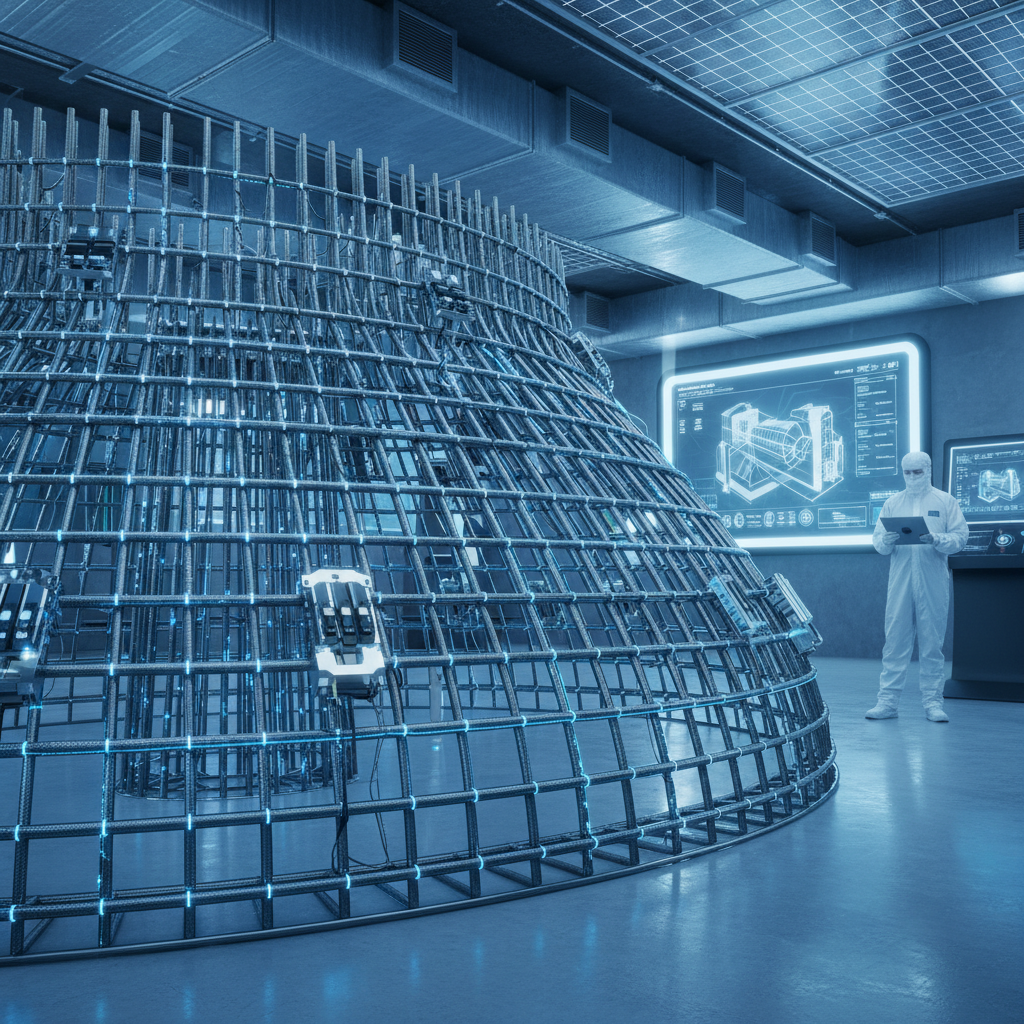
The Fundamental Nature of Glass Fibre Reinforcement Bars
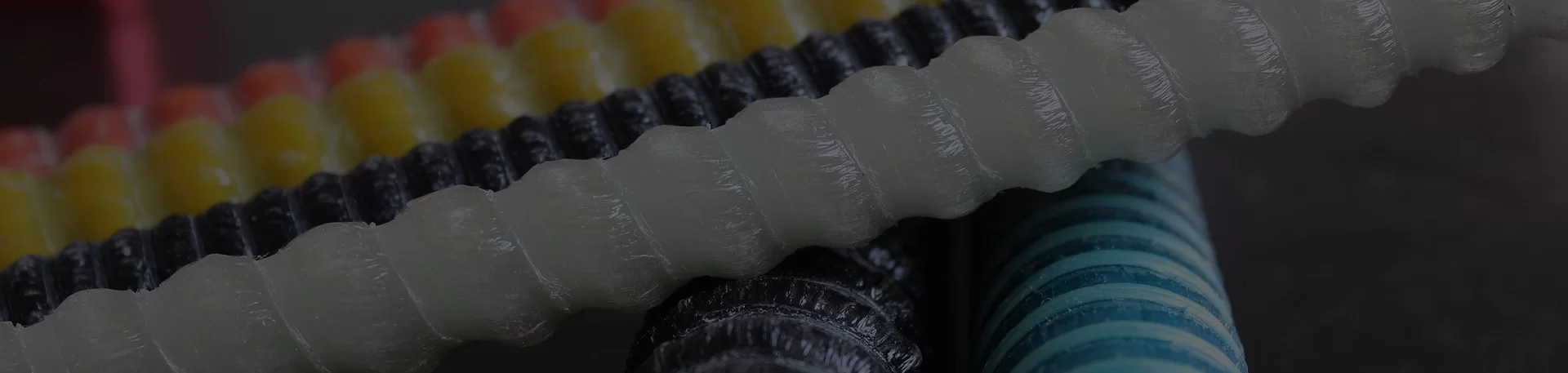
At its core, a glass fibre reinforcement bar is a composite material consisting of high-strength glass fibers embedded in a specialized polymer resin matrix. This synergy creates a product that possesses the tensile strength of steel but without the susceptibility to rust or chemical degradation. The fibers provide the load-bearing capacity, while the resin protects the fibers and ensures an efficient transfer of stress throughout the bar.
Unlike traditional metal bars, these composites are engineered to withstand alkaline environments, such as those found in curing concrete. By utilizing alkali-resistant (AR) glass or specialized vinyl ester resins, the glass fibre reinforcement bars maintain their structural properties over a lifespan that often exceeds that of conventional reinforced concrete, making them a cornerstone of modern material science.
Global Industry Context and Infrastructure Challenges
Across the globe, the degradation of concrete infrastructure due to steel corrosion is a multi-billion dollar problem. According to industry reports aligned with ISO standards, the "concrete cancer" caused by chloride penetration in coastal areas leads to premature failure of bridges and piers. This global challenge has forced governments and private developers to seek materials that can survive in saltwater and chemically aggressive soils.
The industrial shift toward GFRP (Glass Fiber Reinforced Polymer) is not merely a trend but a necessity for sustainable urbanization. In regions like Southeast Asia and North America, where salt-based de-icing is common or humidity is extreme, the reliance on steel has led to a cycle of constant repair. The introduction of glass fibre reinforcement bars breaks this cycle by removing the oxidative element from the structural equation entirely.
Furthermore, the demand for non-magnetic and non-conductive materials in specialized sectors—such as MRI rooms in hospitals or high-voltage power plants—has accelerated the adoption of these composites. By solving the conflict between structural strength and electromagnetic interference, these bars provide a versatile solution that transcends traditional civil engineering.
Key Technical Factors Driving Performance
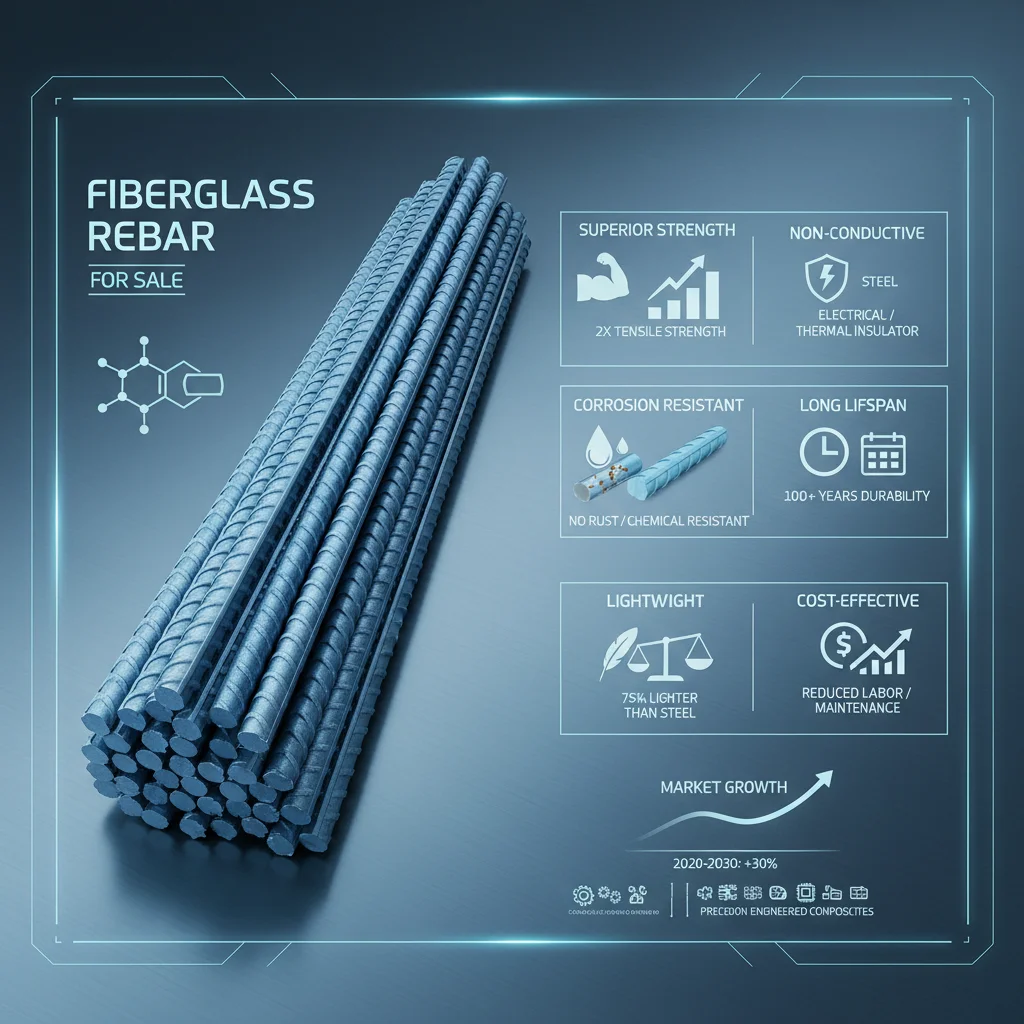
The primary driver of success for glass fibre reinforcement bars is their exceptional strength-to-weight ratio. This allows for a significant reduction in the dead load of a structure, which in turn reduces the requirements for foundation support and lowers overall material consumption during the construction phase.
Corrosion resistance is perhaps the most critical factor. While steel requires expensive epoxy coatings or galvanization to survive in harsh environments, GFRP bars are inherently immune to chloride attack and acid rain. This chemical stability ensures that the internal reinforcement does not expand and crack the surrounding concrete, which is the primary cause of structural failure in traditional builds.
Additionally, the thermal expansion coefficient of these bars is closely aligned with that of concrete. This ensures that as temperatures fluctuate, the reinforcement and the concrete expand and contract at similar rates, preventing the internal delamination and micro-cracking that often plague mismatched material pairings in extreme climates.
Comparative Efficiency and Mechanical Metrics
When analyzing the mechanical efficiency of reinforcement options, the focus typically shifts from initial cost to lifecycle value. Glass fibre reinforcement bars offer a tensile strength that frequently exceeds that of Grade 60 steel, providing a safety margin that is highly attractive for heavy-load applications.
While the modulus of elasticity differs from steel, the high tensile capacity allows engineers to optimize the design of slabs and walls. The following data illustrates how different GFRP implementation methods score across key performance indicators.
Performance Metrics of GFRP Implementation Methods
Strategic Global Applications and Use Cases
In the realm of marine engineering, glass fibre reinforcement bars are indispensable. They are extensively used in the construction of seawalls, jetties, and offshore oil platforms where constant exposure to saltwater would destroy steel in a matter of years. In these contexts, the bars eliminate the need for thick concrete cover, allowing for sleeker, more efficient designs.
Beyond the coast, these materials are finding critical use in urban transit systems. Tunnel linings in metropolitan areas—often exposed to groundwater containing aggressive chemicals—benefit from the longevity of GFRP. Furthermore, in the aerospace and automotive industries, the principles of fiberglass reinforcement are scaled down to create high-strength structural frames that minimize weight while maximizing passenger safety.
Long-Term Economic and Environmental Value
The economic argument for glass fibre reinforcement bars extends far beyond the purchase price. While the initial cost per linear foot may be higher than black steel, the "Total Cost of Ownership" is significantly lower. By eliminating the need for corrosion-inhibiting admixtures and reducing the frequency of structural repairs, owners of infrastructure save millions over a 50-year horizon.
From an environmental perspective, the reduction in maintenance means fewer demolition and reconstruction projects, which are among the largest contributors to global CO2 emissions in the construction sector. The longevity of the material ensures that the carbon footprint of the initial build is amortized over a much longer period.
Moreover, the lightweight nature of these bars reduces the energy required for logistics. Transporting a ton of GFRP reinforcement requires far fewer truck trips than transporting an equivalent strength of steel, further aligning the use of these materials with global "Green Building" certifications and LEED standards.
Future Innovations in Composite Reinforcement
The future of glass fibre reinforcement bars is closely tied to the digitalization of construction. We are seeing the integration of fiber-optic sensors directly into the composite bars, creating "smart reinforcement" that can alert engineers to internal stress or structural shifts in real-time, long before visible cracks appear.
Advancements in bio-based resins are also on the horizon. By replacing petroleum-derived polymers with sustainable, plant-based matrices, the industry is moving toward a completely carbon-neutral reinforcement solution. This innovation will likely be paired with automated pultrusion processes that allow for custom-shaped bars tailored to specific geometric architectural needs.
As global policies shift toward mandatory sustainability reporting, the transition from steel to composite reinforcement will accelerate. The synergy of AI-driven design and advanced material science will allow for the creation of ultra-thin, ultra-strong structures that were previously impossible.
Comparative Analysis of GFRP Evolution and Performance
| Material Generation |
Corrosion Resistance |
Tensile Strength |
Eco-Impact Score |
| Standard Steel |
Low |
High |
4/10 |
| Epoxy Coated Steel |
Medium |
High |
5/10 |
| Early GFRP (E-Glass) |
High |
Medium |
7/10 |
| Modern AR-Glass GFRP |
Very High |
Very High |
8/10 |
| Hybrid Carbon-Glass |
Absolute |
Ultra High |
9/10 |
| Bio-Resin GFRP (Future) |
Absolute |
High |
10/10 |
FAQS
In terms of tensile strength, glass fibre reinforcement bars often exceed the strength of standard steel. However, they have a different modulus of elasticity, meaning they are more flexible. For most concrete applications, this is actually an advantage, as it allows the material to absorb energy and resist cracking more effectively in specific loading scenarios.
They perform exceptionally well. Unlike steel, which oxidizes and expands when exposed to chlorides, GFRP is chemically inert. This makes them the gold standard for marine infrastructure, as they completely eliminate the risk of "concrete spalling" caused by internal rust, drastically extending the service life of the structure.
The initial material cost per unit can be higher. However, when you factor in the elimination of expensive anti-corrosion coatings, reduced labor for transportation due to lower weight, and the near-total removal of future maintenance costs, the lifecycle cost of GFRP is significantly lower than that of steel.
No, GFRP bars cannot be bent using heat or manual force once they are cured. Bends must be manufactured during the pultrusion process at the factory. This requires more precise planning and detailing during the design phase, but it ensures the structural integrity of the bend is not compromised by micro-fractures.
Yes, they contribute to sustainability in several ways. They reduce the carbon footprint of logistics due to their weight and prevent the need for frequent reconstruction of failing infrastructure. Current research is also focusing on bio-resins to make the production process even more eco-friendly.
One of the biggest advantages of glass fibre reinforcement bars is that they are non-conductive and non-magnetic. This makes them essential for hospitals (MRI rooms), airports, and power plants where steel reinforcement would create electromagnetic interference or pose a conductivity risk.
Conclusion
The transition toward glass fibre reinforcement bars represents a fundamental evolution in how we perceive structural durability. By combining the raw tensile power of glass fibers with the chemical resilience of polymers, we are now capable of building infrastructure that defies the traditional limitations of decay and corrosion. From coastal seawalls to high-tech medical facilities, the benefits of weight reduction, lifelong corrosion resistance, and non-conductivity provide a compelling case for the widespread abandonment of traditional steel in aggressive environments.
Looking forward, the integration of smart sensing and sustainable bio-resins will further elevate the role of GFRP in the global construction landscape. We encourage engineers, developers, and architects to move beyond legacy materials and embrace the efficiency of composite technology to ensure a safer, more sustainable built environment. To explore our full range of high-performance solutions, visit our website: www.hbztcomposite.com