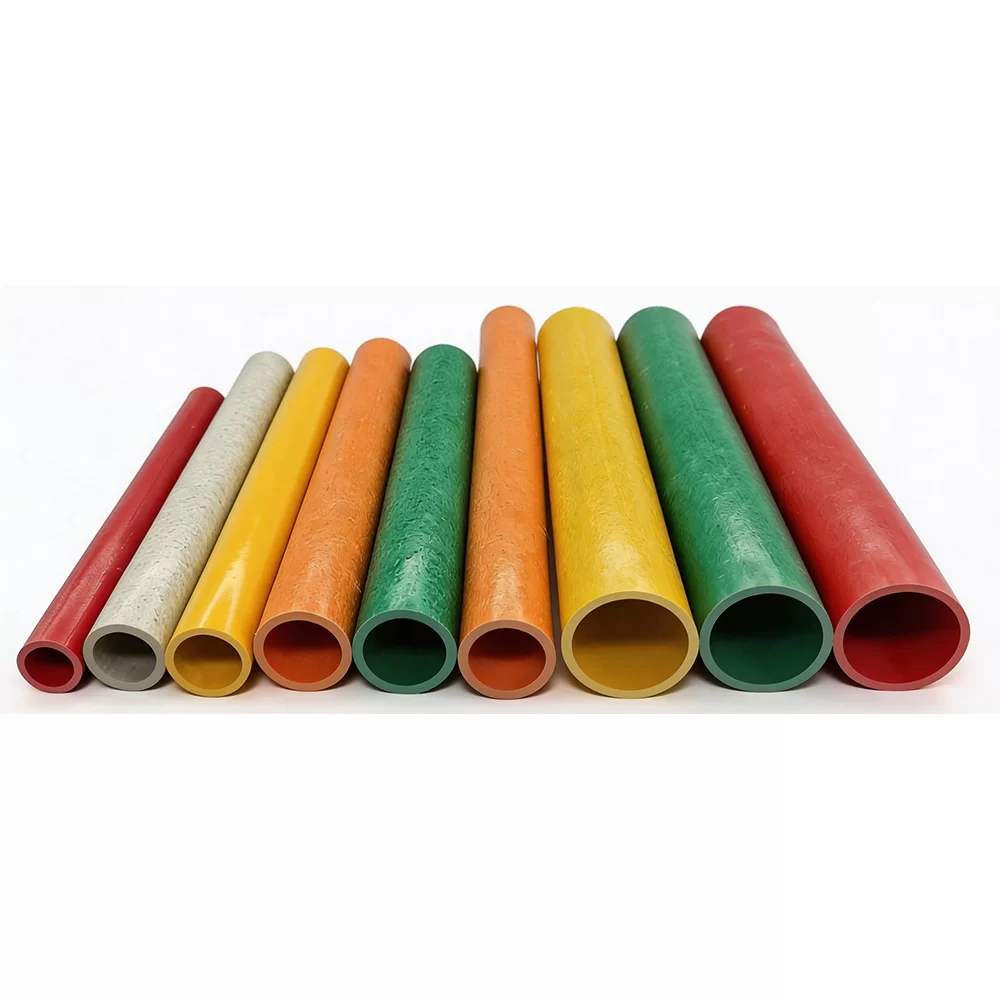
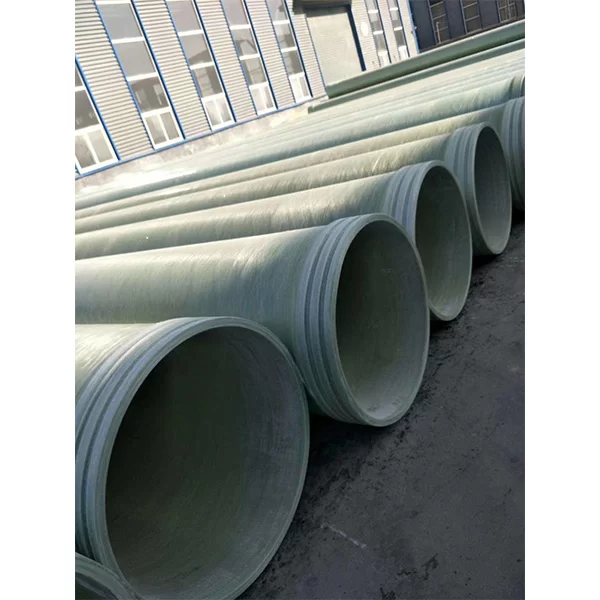
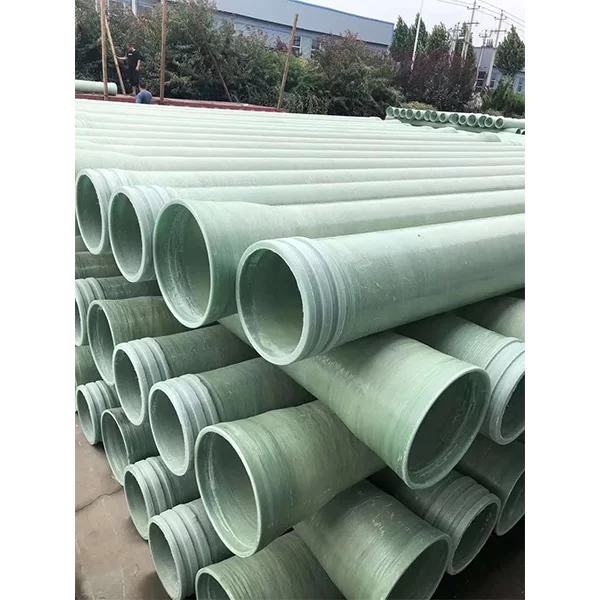
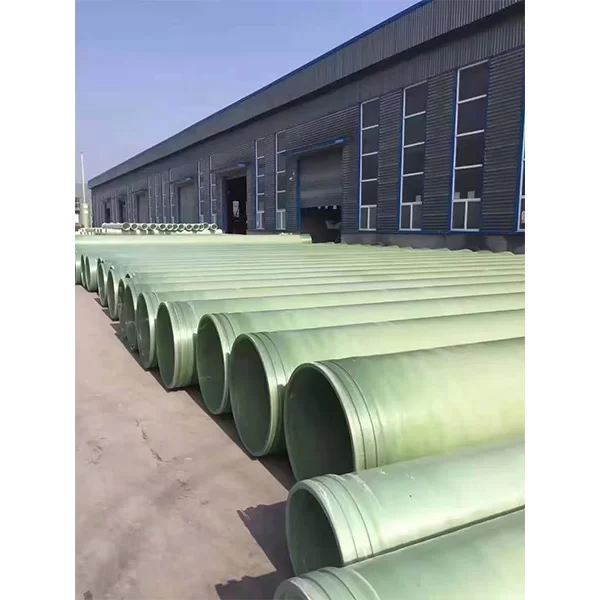
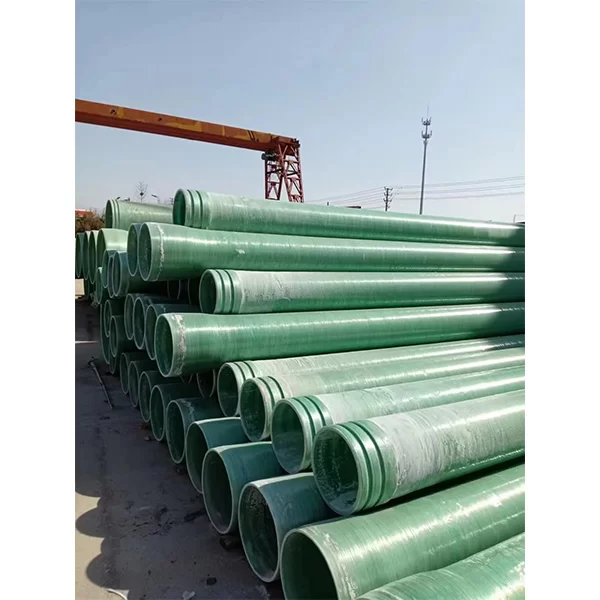
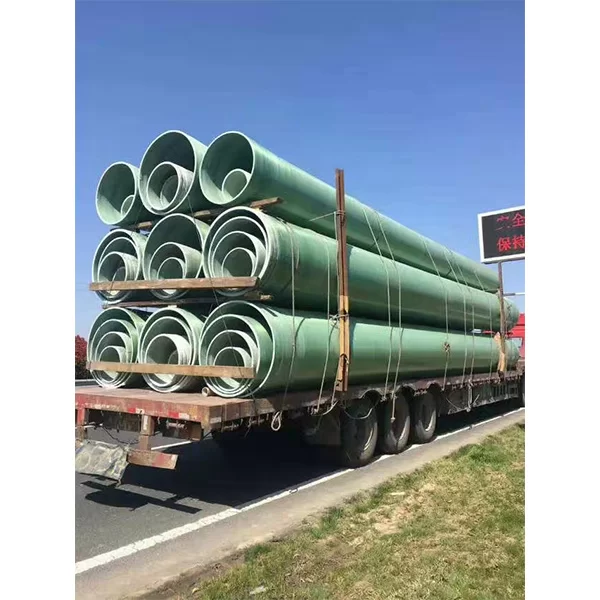
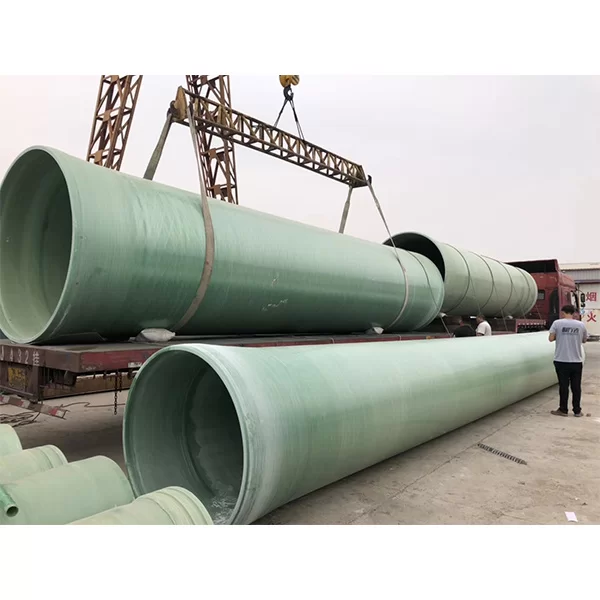
FRP Filament Wound Pipes are advanced composite piping systems manufactured using a continuous filament winding process. These pipes are made from high-strength glass fibers combined with thermosetting resin matrices such as polyester, vinyl ester, or epoxy. Through precise computer-controlled filament winding technology, fibers are strategically oriented at specific angles to optimize mechanical performance, internal pressure resistance, and long-term structural integrity.
Unlike traditional steel, ductile iron, or concrete pipelines, FRP filament wound pipes offer a lightweight yet exceptionally strong alternative for fluid transmission systems. They are specifically engineered to provide superior corrosion resistance, high strength-to-weight ratio, and excellent hydraulic performance. This makes them ideal for demanding industrial, municipal, and infrastructure applications.
The filament winding process ensures uniform wall thickness, enhanced hoop strength, and consistent product quality. Depending on project requirements, pipes can be manufactured in various pressure classes, stiffness classes, diameters, and lengths. Custom configurations are available to meet specific engineering and environmental conditions.
1. Advanced Filament Winding Technology
The filament winding process allows continuous glass fibers to be wound under controlled tension over a rotating mandrel. This precise fiber placement maximizes structural efficiency, especially in the circumferential direction, which is critical for pressure-bearing pipelines. The result is a highly engineered composite pipe with optimized strength distribution.
2. Excellent Corrosion Resistance
FRP filament wound pipes are inherently resistant to chemical corrosion, electrochemical reactions, and microbiologically induced corrosion. Unlike steel pipelines, they do not require additional cathodic protection or internal linings. The use of vinyl ester or epoxy resins enhances resistance to acids, alkalis, salts, and various industrial chemicals.
3. Lightweight Structure
Compared to metal or concrete pipes, FRP pipes are significantly lighter. This reduces transportation costs, simplifies handling, and lowers installation expenses. In many projects, heavy lifting equipment can be minimized or eliminated.
4. High Strength-to-Weight Ratio
Despite their lightweight nature, FRP filament wound pipes exhibit exceptional tensile strength, hoop strength, and axial strength. The glass fiber reinforcement ensures long-term performance under internal pressure and external loads.
5. Smooth Internal Surface
The inner liner of the pipe provides a smooth surface with low friction coefficient, resulting in improved hydraulic efficiency and reduced energy consumption. This allows higher flow capacity compared to traditional materials of the same diameter.
6. Long Service Life
FRP composite pipes are designed for a service life exceeding 50 years under proper operating conditions. They maintain structural integrity and corrosion resistance even in harsh environments.
7. Customizable Design
Pipes can be manufactured in diameters ranging from small to large-scale transmission lines. Various joint systems such as bell-and-spigot, flange joints, and laminated joints are available to suit different installation requirements.
Reduced Installation and Maintenance Costs
Because FRP filament wound pipes are corrosion resistant and lightweight, installation is faster and more economical. There is no need for complex anti-corrosion coatings or regular repainting. Maintenance costs over the life cycle of the project are significantly reduced.
Superior Chemical Stability
In chemical plants and wastewater treatment facilities, pipelines are exposed to aggressive substances. FRP composite pipes maintain stability without rusting, scaling, or deteriorating, ensuring consistent performance over time.
Thermal and Electrical Insulation
FRP materials are non-conductive and provide natural thermal insulation properties. This makes them suitable for applications where electrical conductivity must be avoided or controlled.
Design Flexibility
The filament winding manufacturing method allows engineers to tailor the pipe’s mechanical properties by adjusting fiber orientation and resin composition. This flexibility ensures the pipe system meets project-specific pressure and stiffness requirements.
Environmental Benefits
FRP filament wound pipes require less energy to transport and install due to their lightweight nature. Their long lifespan reduces replacement frequency, minimizing environmental impact over time.
Leak-Free Joint Systems
Modern joint designs ensure reliable sealing performance, preventing leakage and groundwater infiltration. This is particularly important for municipal and potable water systems.
FRP filament wound pipes are widely used across multiple industries due to their versatility and reliability.
Municipal Water Supply Systems
In potable water transmission projects, FRP pipes provide hygienic, corrosion-resistant, and durable solutions. Their smooth internal surface ensures efficient water flow with minimal pressure loss.
Wastewater and Sewer Systems
Sewage and wastewater pipelines often contain corrosive substances and gases. FRP composite pipes resist biological and chemical degradation, making them ideal for underground sewer networks and treatment plants.
Industrial Chemical Processing
Chemical plants require pipelines capable of handling aggressive media such as acids, alkalis, and solvents. FRP filament wound pipes offer excellent chemical compatibility and structural stability.
Desalination and Seawater Systems
In coastal and marine environments, saltwater corrosion is a major challenge for metal pipes. FRP pipes are resistant to chloride-induced corrosion, making them suitable for seawater intake and discharge pipelines.
Power Plants and Energy Sector
Cooling water systems, flue gas desulfurization pipelines, and other industrial fluid transport systems benefit from the corrosion resistance and durability of FRP piping.
Irrigation and Agricultural Systems
Large-diameter FRP pipes are commonly used in irrigation and water conveyance systems due to their lightweight design and long service life.
Oil & Gas and Petrochemical Facilities
FRP pipes are suitable for transporting various non-hydrocarbon fluids and corrosive industrial liquids within refineries and processing plants.
We provide comprehensive composite pipeline solutions tailored to global industrial and municipal markets. With advanced manufacturing equipment, experienced engineering teams, and customized production capabilities, we deliver reliable, high-performance FRP piping systems designed to meet diverse operational demands.
Our commitment to quality, innovation, and customer satisfaction ensures that every project benefits from durable, cost-effective, and environmentally sustainable pipeline solutions.
Apr. 27, 2026
Benefits of Durable Concrete Fiberglass Rebar for Infrastructure

Apr. 24, 2026
High Strength and Corrosion Resistant glass fibre reinforcement bars
Apr. 23, 2026
Reliable frp walkway manufacturer for Industrial Flooring Solutions
Apr. 22, 2026
Sustainable Construction with High Strength gfrp rebars Guide

Apr. 17, 2026
Advantages and Applications of High Strength Glass Rebar
Apr. 16, 2026
The Ultimate Guide to GFRP Rebars for Modern Construction
Looking for Reliable Frp Solutions?